How to Choose a Breakfast Cereal
Look for a whole grain first, a solid amount of fiber, modest added sugar and a realistic serving size. Here's a quick way to compare boxes in the cereal aisle.
On this page
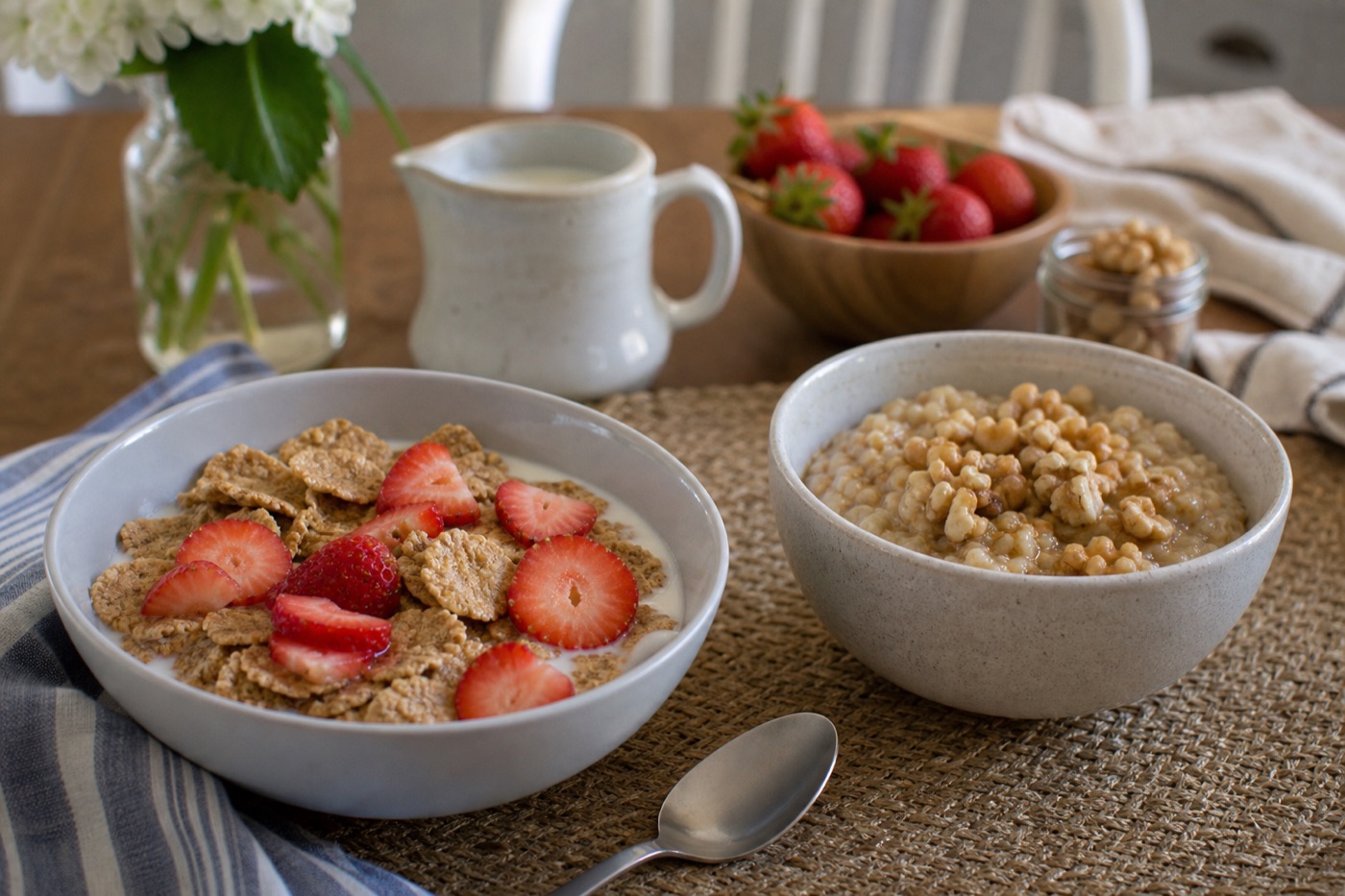
Choose a cereal whose first ingredient is a whole grain, that offers a solid amount of fiber, and that keeps added sugar on the low side, then check the serving size against how much you actually pour. Add milk, yogurt or fruit and cereal becomes a quick, balanced breakfast. Plain hot cereals such as oatmeal are often the simplest choice of all.
The four checks
Run through these on the side panel, in this order:
- Whole grain first. The first ingredient should be a whole grain, such as whole wheat, whole oats, whole-grain corn or brown rice. “Made with whole grain” on the front doesn’t tell you how much.
- Fiber. FDA lets a product call itself a “good source” of fiber when it provides 10% of the Daily Value per serving, or about 3 grams, and “high” or “excellent” at 20% or more, about 6 grams. Those make handy benchmarks.
- Added sugars. Look at the grams and the %DV. Every 4 grams is about a teaspoon. Sugar may also hide under several names; our guide to the names for added sugar helps you spot them.
- Serving size. Dense cereals like granola often list a much smaller serving than light, puffed ones. Measure your usual bowl once to see how many servings you’re really eating.
In practice, put two boxes you like side by side and compare them on these four points. Simple styles, such as plain shredded wheat, unsweetened puffed whole grains and many bran flakes, often do well on fiber and sugar, but recipes differ, so let the label decide. If both boxes pass, choose the one you’ll enjoy eating; a cereal that sits untouched in the pantry doesn’t help anyone.
Box check at a glance
| What to check | A good sign | Why it matters |
|---|---|---|
| First ingredient | a whole grain | it’s the main ingredient by weight |
| Fiber per serving | 10% DV (about 3 g) or more | fiber helps breakfast last |
| Added sugars per serving | 5% DV or less is low | the Daily Value is 50 g for the whole day |
| Serving size | close to what you pour | numbers only apply to that amount |
| Sodium | lower among similar cereals | some flakes and puffs carry more than you’d expect |
Cereals that sound healthier than they are
- Granola. Oats, nuts, oil and sweetener baked together make a tasty, crunchy mix, but it’s calorie-dense, often roughly 200 to 300 calories per half cup. Treat it as a topping.
- “Whole grain” banners. A front-of-box claim about whole grain doesn’t replace reading the first ingredient.
- Fruit-flavored cereals. Some contain little actual fruit; check the ingredient list.
- “Protein” cereals. Some add protein but also plenty of sugar. Compare the full label.
- Cereals marketed to kids. Bright packaging aside, many carry a lot of added sugar for a small serving.
Hot cereals
Plain oats are whole grain, inexpensive and free of added sugar. Steel-cut oats take about 20 to 30 minutes on the stove, rolled oats about 5, and quick or instant oats a minute or two. All three are similar nutritionally; the difference is texture and time.
Flavored instant packets are convenient but often add sugar and sodium. You can make your own version with plain instant oats, cinnamon, a sliced banana or a handful of frozen berries stirred in while hot.
Farina and grits are usually made from refined grains unless the label says whole grain. They can still be part of breakfast; add fruit and a protein to round them out.
About fortification
Many ready-to-eat cereals are fortified with iron, folic acid and other B vitamins, and some with vitamin D. That can be genuinely useful. CDC recommends that women who could become pregnant get 400 micrograms of folic acid every day, and fortified cereal is one way to get it. If you also take a multivitamin, note that a cereal fortified at 100% of the Daily Value for several nutrients adds a lot on top; mention both to your doctor or pharmacist if you’re unsure.
Turn the bowl into a balanced breakfast
Cereal on its own is mostly carbohydrate. A few additions make it a fuller meal:
- Milk or fortified soy milk for protein, calcium and vitamin D
- Fruit such as berries, banana or sliced peaches for fiber and sweetness
- Nuts or seeds for healthy fats and crunch
- A spoonful of plain yogurt on top for extra protein
If you love a sweeter cereal, try mixing it half and half with a plain, high-fiber one. You’ll keep the flavor you like while cutting the sugar per bowl. For more ways to put the morning meal together, see how to build a balanced breakfast.
In the aisle
Whole grain first, fiber at least 10% DV, added sugar low, and a serving size you’ll actually eat. Find two or three boxes that pass, rotate among them, and dress them up with fruit and milk.
Common questions
Is granola a healthy cereal?
It can be part of a healthy breakfast, but it's dense in calories and often sweetened, so portions matter. A few spoonfuls as a topping on plain yogurt or a lighter cereal give you the crunch without a big bowl's worth of sugar.
What's the difference between steel-cut, rolled and instant oats?
They're all whole-grain oats processed differently. Steel-cut oats are chopped and take longest to cook, rolled oats are steamed and flattened, and instant oats are cut thinner and precooked. Plain versions of all three are similar nutritionally.
Is cereal okay for dinner?
A bowl of whole-grain cereal with milk and fruit is a perfectly reasonable light meal now and then. Adding nuts, seeds or a side of yogurt raises the protein if it's standing in for a full dinner.
Sources
Ruth covers nutrition through life stages and everyday health, from feeding school-age kids to eating well after sixty.