Fish and Seafood: How Often, Which Kinds, and Mercury
FDA and EPA advise most adults to eat at least 8 ounces of seafood a week, choosing lower-mercury fish like salmon, shrimp and sardines. Here's how to choose.
On this page
Most adults should aim for at least 8 ounces of seafood a week, about two servings, according to the joint advice from the FDA and EPA, choosing from the many fish that are lower in mercury, such as salmon, shrimp, sardines, cod, tilapia, pollock and canned light tuna. People who are pregnant or breastfeeding are encouraged to eat 8 to 12 ounces a week from those same lower-mercury choices. A short list of large predatory fish, such as swordfish and shark, is best avoided by those groups and by young children.
Why seafood is worth the effort
Fish and shellfish provide high-quality protein along with nutrients that are harder to find elsewhere: the omega-3 fats EPA and DHA, vitamin B12, iodine, selenium and, in fatty fish, vitamin D. During pregnancy and early childhood, eating fish supports a baby’s brain development, which is why federal advice encourages it rather than discouraging it. Shellfish deserve a mention too: oysters are one of the richest food sources of zinc, and clams and mussels supply plenty of vitamin B12 and iron. Seafood also fits naturally into heart-friendly eating, covered in our guide to eating for a healthy heart.
How much, and how big a serving
FDA and EPA describe a typical adult serving as 4 ounces, measured before cooking. For children, servings scale with age.
| Who | Servings per week | Serving size |
|---|---|---|
| Adults | at least 2 (8 oz or more) | 4 oz |
| Pregnant or breastfeeding | 2 to 3 (8 to 12 oz) from best choices | 4 oz |
| Children 1–3 | 2 | 1 oz |
| Children 4–7 | 2 | 2 oz |
| Children 8–10 | 2 | 3 oz |
| Children 11 and older | 2 | 4 oz |
Which fish to choose
FDA and EPA sort commonly eaten fish into three groups based on mercury.
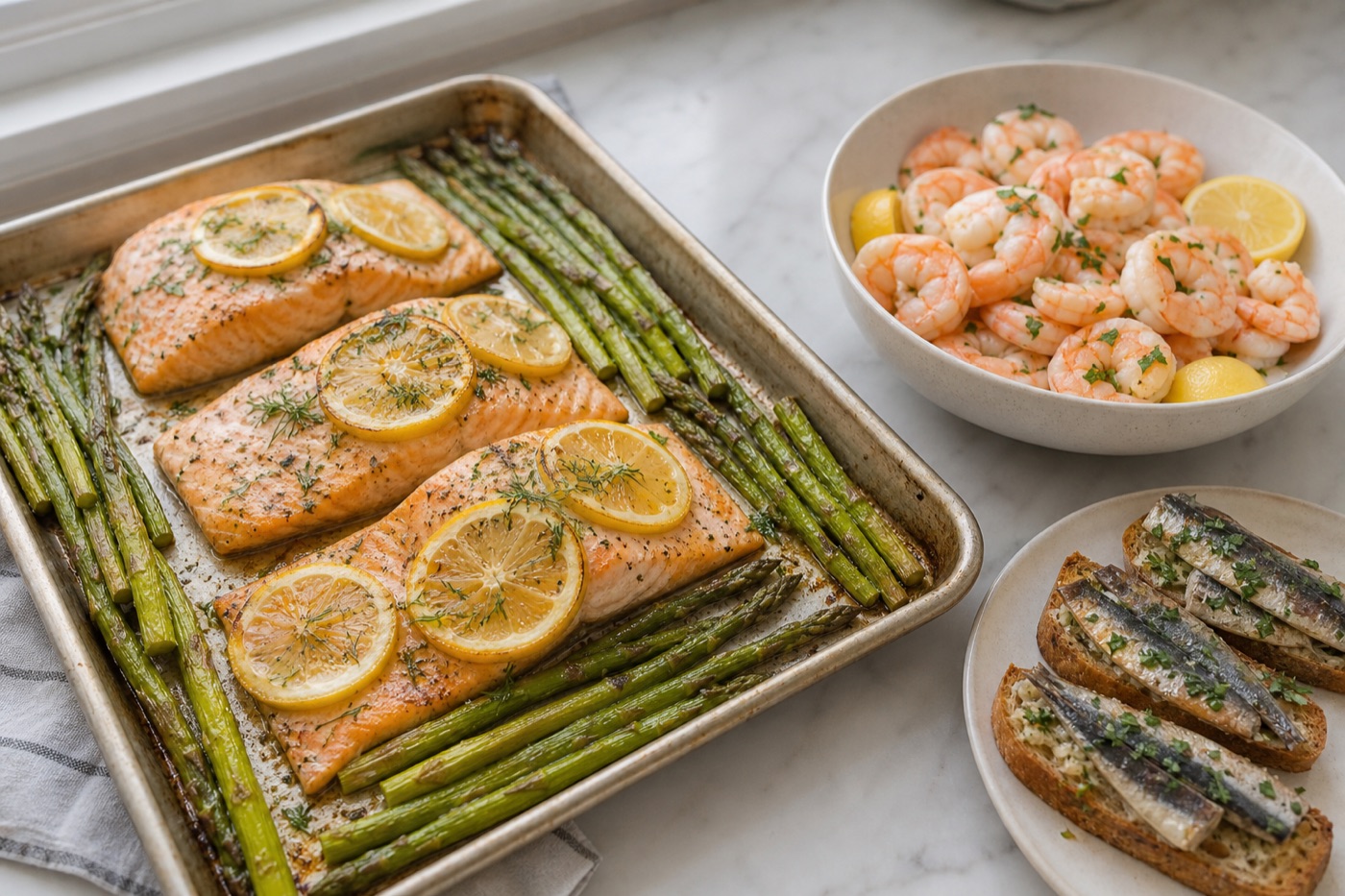
Best choices (2 to 3 servings a week): anchovies, Atlantic mackerel, catfish, clams, cod, crab, crawfish, flounder, haddock, herring, lobster, oysters, pollock, salmon, sardines, scallops, shrimp, sole, squid, tilapia, trout, canned light tuna including skipjack, and whitefish.
Good choices (1 serving a week): albacore or white tuna, yellowfin tuna, halibut, mahi-mahi, grouper, snapper, rockfish and Chilean sea bass, among others.
Choices to avoid: king mackerel, marlin, orange roughy, shark, swordfish, tilefish from the Gulf of Mexico, and bigeye tuna.
The full chart, with more species, is on the FDA’s fish advice page listed in the sources.
Making sense of mercury
Mercury from the environment builds up in fish as methylmercury. Big, long-lived predatory fish eat many smaller fish over their lifetimes, so they accumulate the most. Small amounts aren’t a concern for most adults, but a developing brain is more sensitive, which is why the advice focuses on pregnancy, breastfeeding and young children. Eating a variety of best-choice fish keeps exposure low while you still get the benefits.
Fish caught by family and friends
If you or someone you know fishes in local lakes, rivers or coastal waters, check your state or local fish advisories before eating the catch. If there’s no advisory for that water, FDA and EPA suggest eating just one serving that week and no other fish.
Affordable, easy options
Seafood doesn’t have to be expensive or complicated:
- Canned salmon, sardines and light tuna keep for years in the pantry and work in salads, sandwiches and patties.
- Frozen fillets of cod, pollock, tilapia or salmon are often cheaper than fresh and cook straight from frozen in many recipes.
- Frozen shrimp thaws in minutes under cold running water.
- Canned salmon with its soft bones adds calcium as well as protein; mash the bones right into the mix.
To thaw frozen fish safely, move it to the refrigerator the night before, or seal it in a plastic bag and submerge it in cold water. Thin fillets can also be cooked straight from frozen; USDA notes that cooking from frozen takes roughly half again as long.
A few quick ideas: tuna and white bean salad, salmon patties with a side of greens, fish tacos with shredded cabbage and lime, or sheet-pan cod with potatoes and green beans.
Cooking and handling safely
- Cook fish to an internal temperature of 145°F, or until the flesh is opaque and separates easily with a fork.
- Cook shrimp and lobster until the flesh turns pearly and opaque. Clams, mussels and oysters are done when their shells open; throw out any that stay closed.
- Refrigerate leftovers within 2 hours and eat them within 3 to 4 days.
- Raw or undercooked shellfish, especially oysters, can carry harmful bacteria. People who are pregnant, older, or who have liver disease or a weakened immune system should eat shellfish only fully cooked.
If you’re pregnant
ACOG and federal advice encourage fish during pregnancy, from lower-mercury choices. Skip raw fish and refrigerated smoked seafood unless it’s cooked into a dish, because of the risk of listeria. Your OB-GYN or midwife can answer questions about your own situation, and our guide to eating well during pregnancy covers the broader picture.
A simple weekly rhythm
Plan two seafood meals a week: maybe canned salmon or tuna at lunch and a fish fillet or shrimp at dinner. Choose mostly from the best-choices list, vary the species, and cook to 145°F. That covers the recommendation for most adults without overthinking it.
Common questions
Is canned tuna safe to eat every week?
Canned light tuna, including skipjack, is on the FDA and EPA list of best choices, so two to three servings a week is fine for most people. Albacore, or white tuna, has more mercury and is listed as a good choice, best kept to about one serving a week.
Do fish oil supplements replace eating fish?
Not exactly. Fish provides protein, vitamins and minerals along with omega-3s, and research on supplements has produced mixed results. Talk with your doctor before taking them, especially if you use a blood-thinning medicine.
Is farmed salmon as healthy as wild salmon?
Both are good sources of protein and omega-3 fats, and both appear on the list of best choices for mercury. Nutrient amounts vary with species and feed, so either can fit into a healthy diet.
Sources
Ruth covers nutrition through life stages and everyday health, from feeding school-age kids to eating well after sixty.