Beans and Lentils: A Beginner's Guide
Beans and lentils are cheap, filling and rich in fiber and plant protein. Learn the main types, canned vs. dried, cooking basics and easy ways to eat more.
On this page
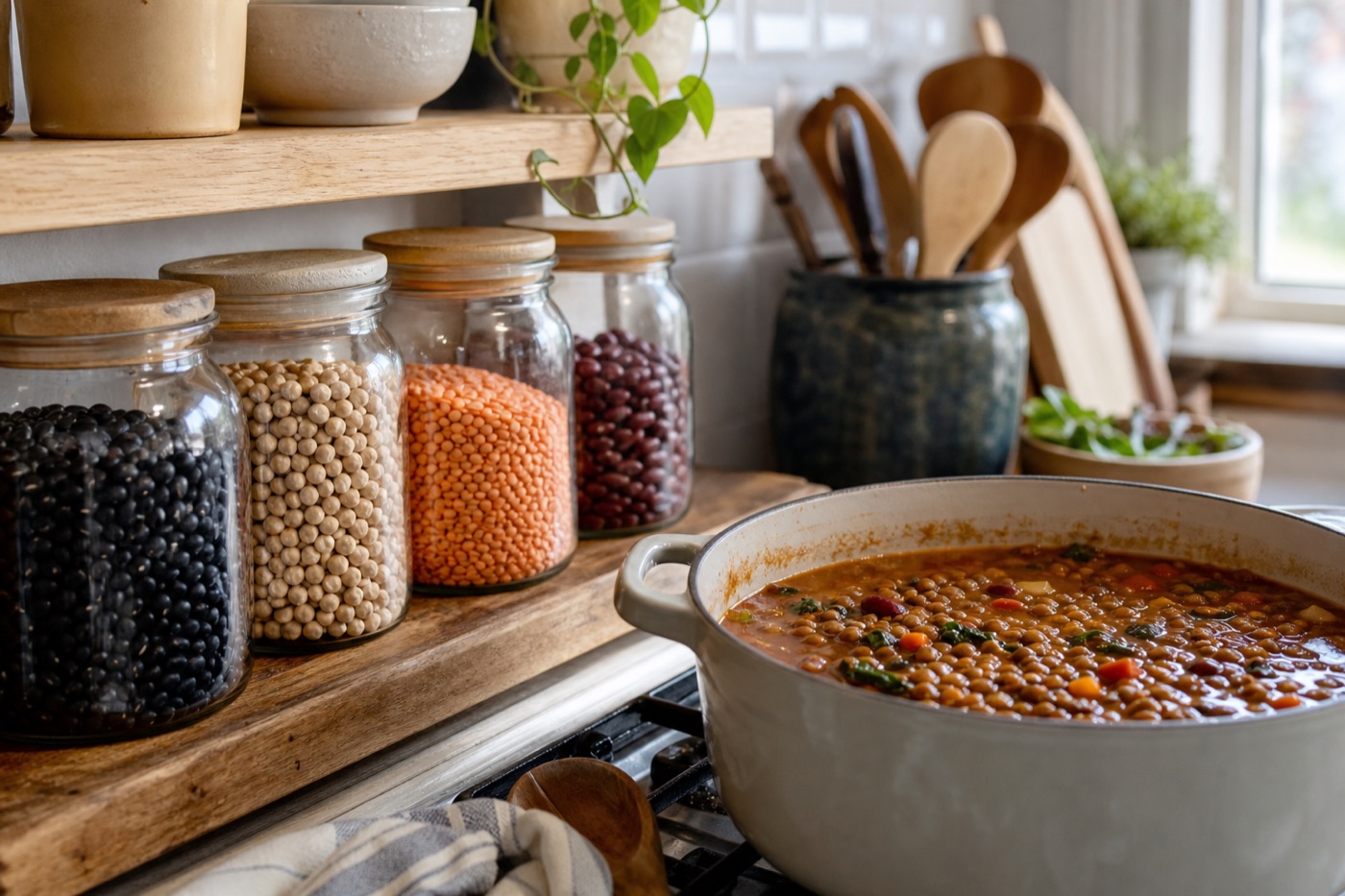
Beans, peas and lentils, often grouped together as pulses, are some of the most useful foods you can buy: inexpensive, shelf-stable and packed with fiber, plant protein, folate, potassium and iron. Half a cup of cooked beans or lentils typically provides about 7 to 9 grams of protein and 6 to 9 grams of fiber. Canned versions are ready in minutes, and dried ones cost even less per serving.
Why they count twice
MyPlate gives beans, peas and lentils a special status: they can count toward either the vegetable group or the protein foods group. One cup of cooked beans counts as a cup of vegetables, while ¼ cup counts as 1 ounce-equivalent of protein. That flexibility makes them a natural fit whether you eat meat or not. For a wider look at meatless options, see our guide to plant protein foods.
The main types
Approximate values per ½ cup cooked, based on USDA FoodData Central:
| Type | Calories | Protein | Fiber | Try it in |
|---|---|---|---|---|
| Black beans | about 115 | about 7–8 g | about 7–8 g | tacos, rice bowls, soup |
| Pinto beans | about 120 | about 8 g | about 8 g | refried beans, chili |
| Kidney beans | about 110 | about 8 g | about 6 g | chili, red beans and rice |
| Chickpeas | about 135 | about 7 g | about 6 g | hummus, salads, roasted snacks |
| Navy beans | about 125 | about 7–8 g | about 9–10 g | baked beans, soup |
| Brown or green lentils | about 115 | about 9 g | about 8 g | soups, salads, sloppy joes |
| Split peas | about 115 | about 8 g | about 8 g | split pea soup |
Beyond protein and fiber, pulses are good sources of folate, potassium, iron and magnesium, and they’re naturally low in fat.
Canned or dried?
Canned beans are the easy option. They’re fully cooked and ready to use. Drain and rinse them to remove some of the sodium, or buy cans labeled no salt added. A standard 15-ounce can yields about 1½ cups of beans once drained.
Dried beans cost less per serving and let you control the salt and texture. One cup of dried beans makes roughly 2 to 3 cups cooked, depending on the variety. Cook a big pot on the weekend and freeze extras in their cooking liquid in 1½-cup portions, the same amount as a can.
How to cook dried beans
- Sort and rinse. Spread the beans on a tray and pick out any small stones or shriveled beans, then rinse.
- Soak. Cover with plenty of water and soak overnight, or quick-soak by bringing them to a boil for 2 minutes, then covering and letting them sit for an hour. Drain and discard the soaking water.
- Simmer. Cover with fresh water by a couple of inches and simmer gently until tender. Depending on the type and age of the beans, that’s often 1 to 2 hours. A pressure cooker cuts the time considerably.
- Season. Add salt and acidic ingredients like tomatoes once the beans start to soften.
Lentils and split peas skip the soak. Red lentils cook in roughly 15 to 20 minutes and melt into a thick purée, perfect for soups. Brown and green lentils take about 20 to 30 minutes and hold their shape for salads.
A safety note on kidney beans: raw or undercooked red kidney beans contain a natural toxin that can cause severe stomach upset. Dried kidney beans should be soaked and then boiled hard in fresh water before simmering; don’t cook them from dry in a slow cooker on low heat. Canned kidney beans are already safely cooked.
Easing the gas
Beans contain certain carbohydrates that gut bacteria ferment, which can cause gas. A few habits help:
- Start with small portions and increase gradually over a few weeks.
- Rinse canned beans well.
- Discard the soaking water from dried beans.
- Drink plenty of water as your fiber intake rises.
For many people, eating beans regularly makes them easier to tolerate over time.
Ten easy ways to eat more
- Stir black beans into scrambled eggs or breakfast tacos.
- Blend chickpeas with lemon, tahini and garlic for a quick hummus.
- Replace half the ground meat in chili, tacos or pasta sauce with lentils or beans.
- Toss white beans with canned tuna, red onion, parsley and olive oil.
- Add a can of beans to vegetable soup; our ideas for soups and stews show how.
- Roast drained chickpeas with spices for a crunchy snack.
- Make red beans and rice with peppers, onions and celery.
- Simmer lentil sloppy joes in a tomato-based sauce.
- Mash pinto beans with cumin for a bean dip or burrito filling.
- Top a green salad with a scoop of chickpeas or lentils.
Because they’re so affordable, pulses are a mainstay of healthy foods that cost less.
Start with one can
You don’t need to master dried beans on day one. Pick up a couple of cans, drain and rinse them, and add them to meals you already make. Once beans feel familiar, cooking a pot from scratch is an easy next step.
Common questions
Do I have to soak beans before cooking?
Soaking shortens the cooking time and helps beans cook evenly, but for most varieties it isn't strictly required if you're willing to simmer longer. Lentils and split peas never need soaking. Dried red kidney beans, however, should always be soaked and then boiled hard before simmering.
Are canned beans as nutritious as dried?
They're very close in protein and fiber. The main difference is sodium, which you can lower by choosing no-salt-added cans or draining and rinsing the beans before use.
Are green beans and peanuts counted as beans?
Not in nutrition terms. Green beans are eaten as a tender pod and are grouped with other vegetables, while peanuts, though technically legumes, are grouped with nuts because of their high fat content.
Sources
Ruth covers nutrition through life stages and everyday health, from feeding school-age kids to eating well after sixty.