How to Build a Balanced Breakfast
A balanced breakfast pairs a protein, a fiber-rich carb and a fruit or vegetable. Use this simple formula, quick combos and tips for rushed or slow mornings.
On this page
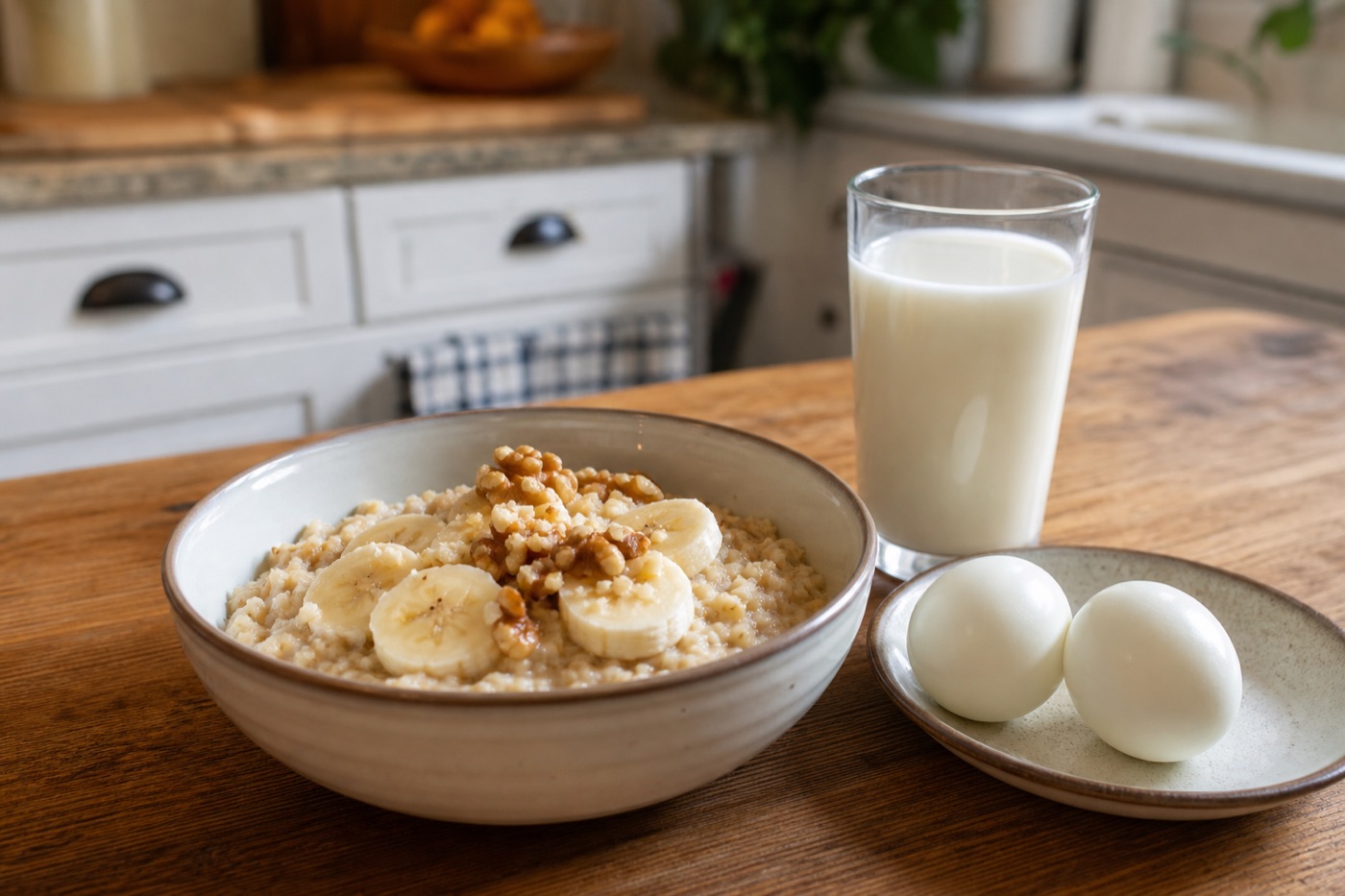
A balanced breakfast has three parts: a protein, a carbohydrate that brings fiber along with it, and at least one fruit or vegetable. Add a little fat for flavor and you have a morning meal that touches several food groups and keeps you going until lunch. It doesn’t have to be big, hot or eaten at the crack of dawn.
Why a mix beats a single food
A plain bagel, a bowl of frosted cereal or a pastry is mostly refined carbohydrate. That’s fast energy, and many people notice they’re hungry again a couple of hours later. Bringing in protein and fiber slows the meal down so it feels more substantial. Fruit or vegetables add vitamins, potassium and more fiber, and they make breakfast an easy place to chip away at your daily produce goal.
MyPlate’s idea of building meals from several food groups works just as well at 7 a.m. as it does at dinner. You don’t need every group every morning; two or three is a good start.
The building blocks
Protein. Eggs, plain yogurt, cottage cheese, milk or fortified soy milk, tofu, beans, leftover chicken or fish, or a spoonful of nut butter.
Fiber-rich carbohydrate. Oatmeal, whole-grain toast, a whole-wheat or corn tortilla, leftover brown rice, or a cereal that lists a whole grain first. Our guide to choosing a breakfast cereal walks through what to look for on the box.
Fruit or vegetable. Berries, a banana, an orange, a handful of spinach wilted into eggs, salsa, sliced tomatoes, or last night’s roasted peppers.
A little fat. Avocado, nuts, seeds, a drizzle of olive oil or a bit of cheese.
What common breakfast foods provide
These are approximate values based on USDA FoodData Central. Packaged foods vary by brand and recipe, so the label on your package is the final word.
| Food | Portion | Roughly provides |
|---|---|---|
| Egg | 1 large | about 70–80 calories, 6 g protein |
| Plain Greek yogurt | 6 oz | about 100–170 calories, 15–17 g protein |
| Cottage cheese | ½ cup | about 80–110 calories, 12–14 g protein |
| Rolled oats | ½ cup dry | about 150 calories, 5 g protein, 4 g fiber |
| Whole-wheat bread | 1 slice | about 70–110 calories, 2–3 g fiber |
| Peanut butter | 2 tbsp | about 190 calories, 7–8 g protein |
| Black beans | ½ cup cooked | about 115 calories, 7–8 g protein, 7–8 g fiber |
| Raspberries | 1 cup | about 65 calories, 8 g fiber |
| Banana | 1 medium | about 105 calories, 3 g fiber |
Seven quick combinations
- Overnight oats. Stir rolled oats with milk or yogurt and a spoonful of chia seeds the night before, then top with berries in the morning.
- Veggie scramble. Two eggs cooked with spinach and chopped tomato, plus a slice of whole-grain toast.
- Yogurt bowl. Plain yogurt with sliced peaches or berries and a small handful of walnuts or almonds.
- Breakfast tacos. Warm corn tortillas filled with scrambled eggs or mashed black beans, salsa and a sprinkle of cheese.
- Peanut butter toast. Whole-grain toast with peanut butter and banana slices, and a glass of milk on the side.
- Cottage cheese plate. Cottage cheese with pineapple chunks and a few whole-grain crackers.
- Savory leftovers. Reheated brown rice topped with a fried egg and a pile of sautéed greens.
Fitting it into real mornings
When time is short
The best breakfast is the one you’ll actually eat, so a little prep goes a long way. Hard-cook a batch of eggs on the weekend; kept in the refrigerator, they’re good for about a week. Portion dry oats and seeds into jars so all you add is liquid. Wrap egg-and-bean burritos individually and freeze them for reheating. Keep fruit that travels well, like apples, bananas and clementines, in a bowl near the door.
If you pick up breakfast on the way to work, the same formula applies: look for something built around eggs, yogurt or beans, and grab a piece of fruit to go with it.
When you’re not hungry first thing
Nothing says you have to eat the minute you wake up. Some people feel better with a mid-morning meal, or with a small start, like a glass of milk and a piece of fruit or a few spoonfuls of yogurt, followed by something more filling later. Pay attention to how you feel by late morning. If you’re regularly starving by 11 and reaching for whatever is close, an earlier, more balanced meal may smooth out the rest of the day.
Watch the extras
Flavored yogurts, granola, sweetened coffee drinks and pastries can carry a surprising amount of added sugar. Starting with plain versions and adding your own fruit, cinnamon or a small drizzle of honey puts you in charge of the sweetness. Our rundown of the names for added sugar helps you spot it on ingredient lists.
Start with one swap
You don’t need a brand-new routine. Look at tomorrow’s usual breakfast and add the missing piece: protein with your toast, fruit with your eggs, or a whole grain in place of a refined one. Keep what works, drop what doesn’t, and within a couple of weeks a balanced breakfast becomes the default rather than the exception.
Common questions
Is it bad to skip breakfast?
Not necessarily. Plenty of people eat well without a morning meal, and the overall quality of your day's food matters more than its timing. If skipping leaves you overly hungry and grabbing whatever is nearby later, a small, balanced breakfast may help.
How much protein should breakfast have?
Federal guidance doesn't set a breakfast-specific amount. A practical goal is one clear protein source, such as eggs, yogurt, milk, tofu, beans or nut butter, served alongside your carbohydrate.
Are smoothies a balanced breakfast?
They can be if you build them like a meal: fruit or vegetables, a protein such as yogurt, milk or soy milk, and some fiber from oats or ground flaxseed. A smoothie made mostly from juice and sweetened add-ins is closer to a treat.
Sources
Naomi edits Nutrition for Everybody and writes the app rankings. She cares most about advice that still works on a Tuesday night with a tired family and a half-empty fridge.