Cooking Oils Compared: Which to Use for What
Olive, canola and avocado oil are mostly unsaturated fat; coconut oil and butter are high in saturated fat. Compare cooking oils by heat, flavor and best use.
On this page
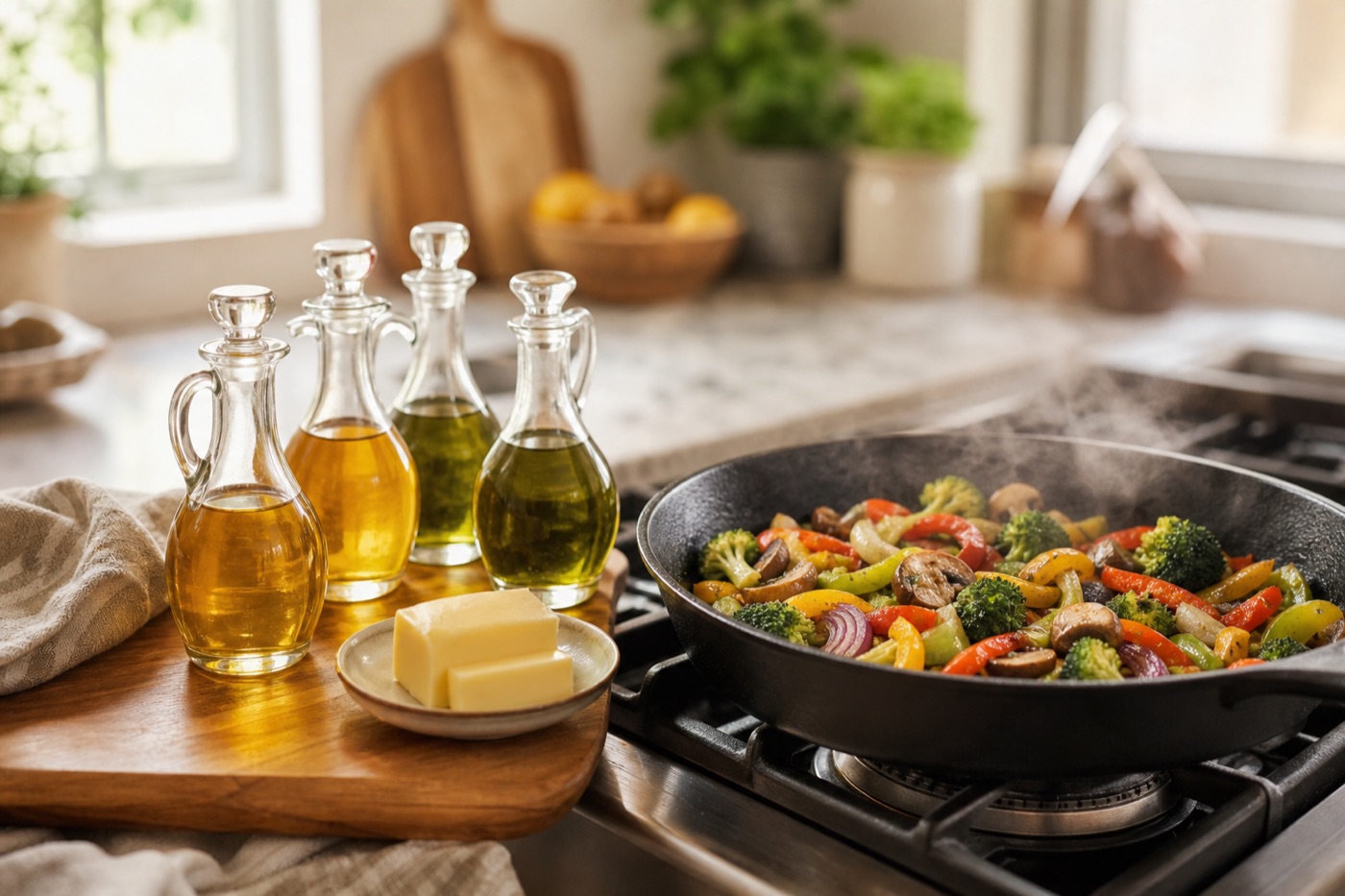
For everyday cooking, reach for liquid plant oils such as olive, canola, avocado, peanut, sunflower or soybean oil. They’re mostly unsaturated fat, which the American Heart Association recommends in place of saturated fat. Then match the oil to the job: a flavorful extra virgin olive oil for dressings and moderate-heat cooking, and a neutral oil that handles more heat for searing and high-temperature roasting. Save coconut oil and butter for small amounts.
Same calories, different fats
Whatever the bottle, a tablespoon of oil provides roughly 120 calories, according to USDA FoodData Central. Butter is a little lower, at about 100 calories per tablespoon, because it contains some water. So the real differences between oils come down to three things: the type of fat, the flavor and how well each handles heat.
Fat types in plain terms
- Monounsaturated fat is the main fat in olive, avocado, canola and peanut oil, and in high-oleic sunflower and safflower oils.
- Polyunsaturated fat dominates soybean, corn, regular sunflower, walnut and flaxseed oils. It includes omega-6 fats and the plant omega-3 called ALA, found in canola, soybean, walnut and flaxseed oil.
- Saturated fat is high in coconut oil, palm oil, butter and lard, which is why they’re solid or semi-solid at room temperature.
Swapping saturated fats for unsaturated ones is linked with healthier cholesterol levels. The 2020–2025 Dietary Guidelines suggest keeping saturated fat under 10% of daily calories.
Side by side
Saturated fat values are rounded from USDA FoodData Central.
| Oil or fat | Saturated fat per tbsp | Main fat type | Flavor | Good for |
|---|---|---|---|---|
| Extra virgin olive oil | about 2 g | monounsaturated | fruity, peppery | dressings, drizzling, sautéing, moderate roasting |
| Refined or light olive oil | about 2 g | monounsaturated | mild | general cooking at higher heat |
| Canola oil | about 1 g | monounsaturated, some omega-3 | neutral | baking, sautéing, roasting |
| Avocado oil, refined | about 1.5–2 g | monounsaturated | mild | searing, high-heat roasting |
| Peanut oil | about 2 g | mono- and polyunsaturated | mild, nutty | stir-frying, frying |
| Soybean or vegetable oil | about 2 g | polyunsaturated | neutral | baking, general cooking |
| High-oleic sunflower or safflower | about 1 g | monounsaturated | neutral | high-heat cooking |
| Toasted sesame oil | about 2 g | mono- and polyunsaturated | strong, toasty | finishing in small amounts |
| Coconut oil | about 11–12 g | saturated | coconut | occasional baking |
| Butter | about 7 g | saturated | rich, creamy | flavor in small amounts |
Heat and smoke point
Every oil has a smoke point, the temperature at which it begins to smoke and break down, producing off flavors and irritating fumes. Smoke points vary with the type of oil and especially with how refined it is: refined oils generally handle more heat than unrefined ones. Published numbers differ from source to source, so it’s more useful to think in tiers:
- Higher heat (searing, stir-frying, roasting above about 425°F): refined avocado oil, peanut oil, high-oleic sunflower or safflower oil, canola oil.
- Medium heat (sautéing, everyday roasting and baking): extra virgin olive oil, regular olive oil, canola oil.
- Little or no heat (dressings, dips, finishing): flaxseed oil, walnut oil, toasted sesame oil.
If oil smokes heavily, it’s too hot. Turn on the vent, take the pan off the burner, and start again with fresh oil if it smells acrid.
Where coconut oil and butter fit
Coconut oil has become popular, but it’s more than 80% saturated fat, a higher share than butter. The American Heart Association advises limiting tropical oils like coconut and palm for that reason. Butter brings flavor that’s hard to replace in some dishes; using a small amount for taste, or swapping half of it for oil in recipes like muffins and sautéed vegetables, keeps the flavor while lowering saturated fat. Ghee, or clarified butter, handles higher heat than butter but is just as concentrated in saturated fat.
Buying and storing oil
- Light, heat and air break oil down. Store bottles in a cool, dark cupboard, not next to the stove.
- Buy sizes you’ll finish within a few months of opening.
- Delicate nut and seed oils, such as walnut and flaxseed, go rancid quickly; keep them in the refrigerator.
- Rancid oil smells stale or like crayons or paint. If it does, toss it.
Oil is one of the staples worth keeping stocked; our list of healthy pantry staples covers the rest.
Using a little less without noticing
- Measure with a spoon instead of pouring straight from the bottle.
- Toss vegetables with oil in a bowl before roasting so a small amount coats everything evenly.
- Use a pastry brush or refillable mister for pans and grills.
- Cook in a good nonstick or well-seasoned pan, which needs less fat.
For how fats fit into a heart-friendly eating pattern overall, see our guide to eating for a healthy heart.
Pick two and you’re set
Most kitchens run well on just two bottles: an extra virgin olive oil for flavor and everyday cooking, and a neutral, heat-tolerant oil such as canola or high-oleic sunflower for searing and baking. Keep butter and coconut oil for the dishes where their flavor really counts.
Common questions
Is olive oil safe for frying?
For sautéing and pan-frying at moderate heat, yes. Refined or light olive oil tolerates higher heat than extra virgin. If any oil starts to smoke heavily, lower the heat.
What exactly is vegetable oil?
In the U.S., a bottle labeled vegetable oil usually holds soybean oil or a blend of plant oils. It's neutral in flavor, mostly polyunsaturated, and works for baking and general cooking.
Should I avoid seed oils?
Oils such as canola, soybean and sunflower are often criticized online, but the American Heart Association continues to list them among heart-healthy choices when they replace saturated fats like butter. With any oil, the amount you use matters most for calories.
Sources
Elliot writes about foods, labels and the grocery store, from choosing a cereal to stretching a budget without giving up vegetables.