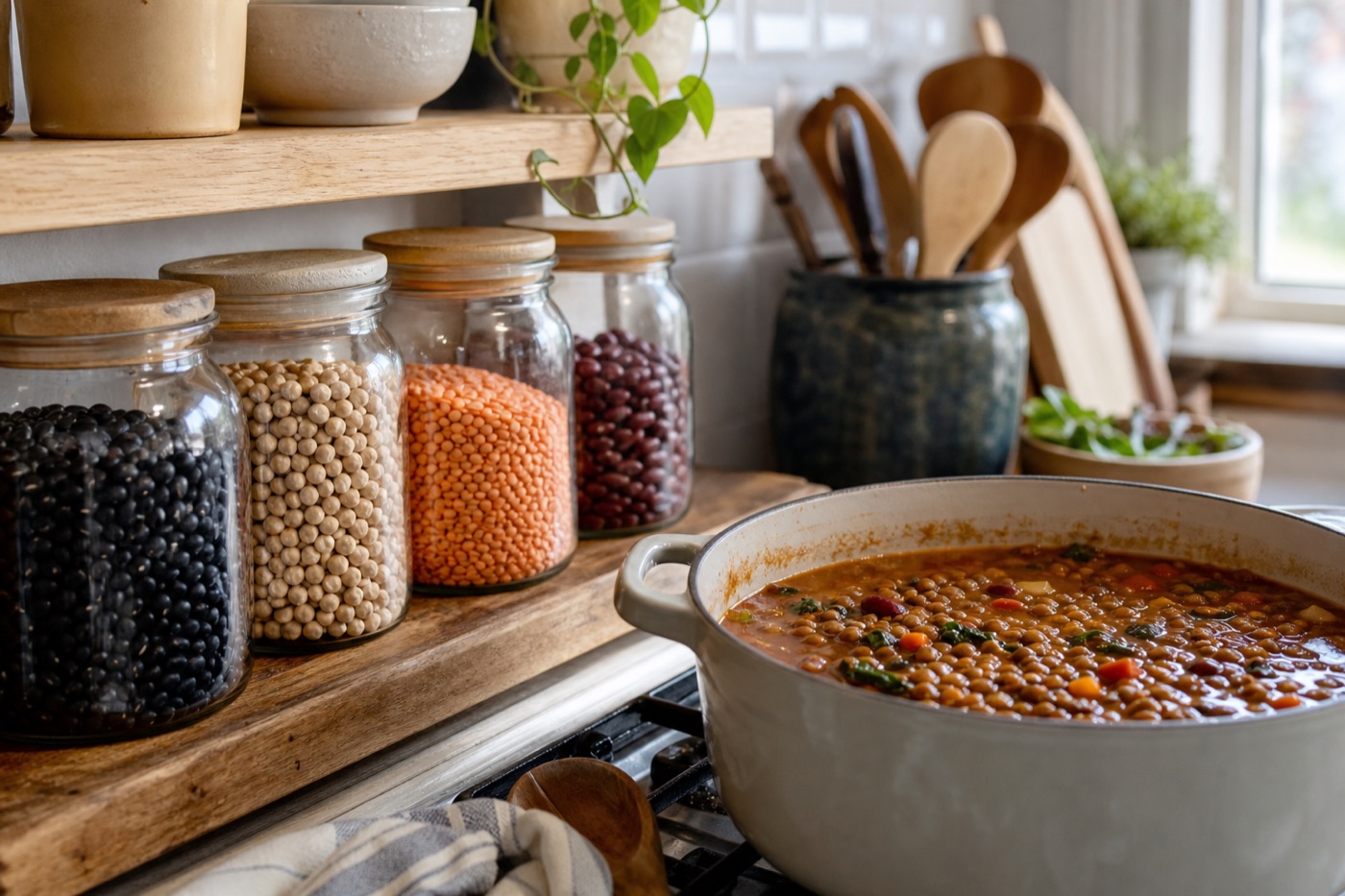
Healthy Pantry Staples to Keep on Hand
A pantry of canned beans, fish, tomatoes, whole grains, nuts, oils and spices makes a healthy meal possible any night. Here's a checklist with storage tips.
On this page
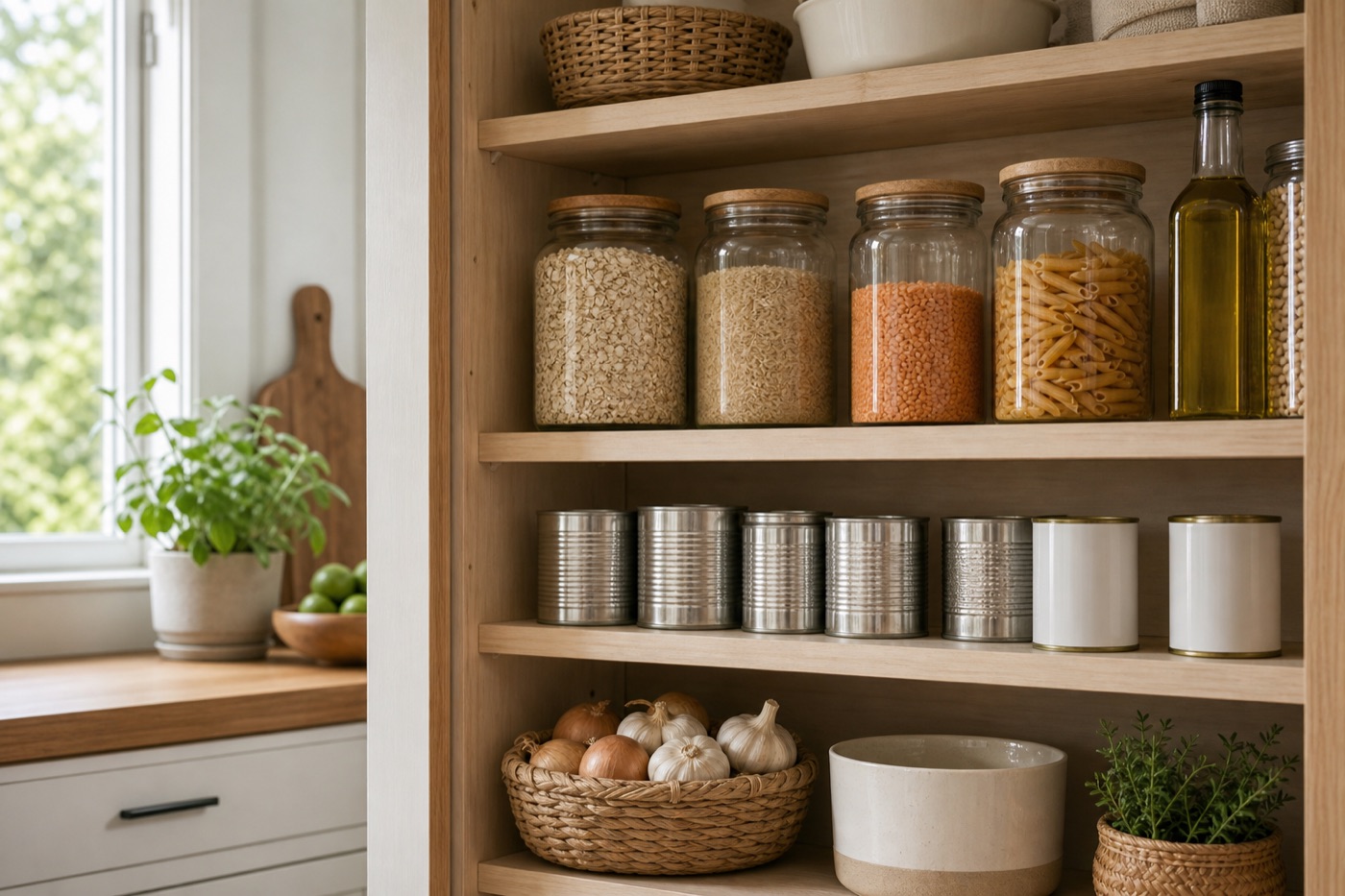
The most useful healthy pantry staples are the ones that turn into a meal with little effort: canned or dried beans and lentils, canned fish, canned tomatoes, whole grains like oats and brown rice, whole-wheat pasta, nuts and nut butter, a good oil, vinegar and a handful of spices. Add a few freezer basics, such as plain vegetables, fruit and fish, and you can put a balanced dinner on the table on a night when the fridge looks bare.
The checklist
Cans and jars
- Beans: black beans, chickpeas, kidney beans and white beans, ideally no salt added or low sodium. Our beginner’s guide to beans and lentils has ideas for every type.
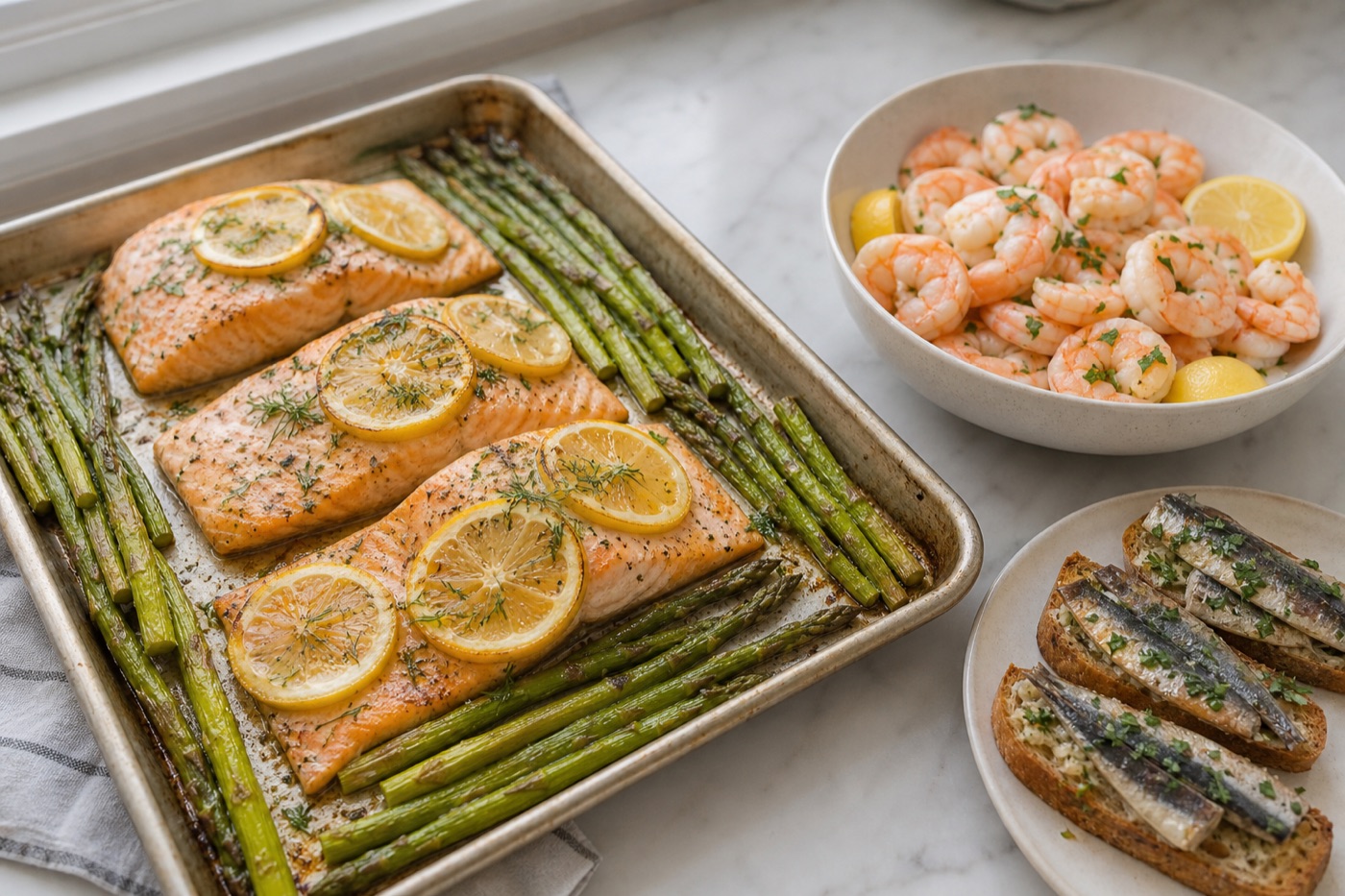
- Fish: canned light tuna, salmon and sardines for quick protein and omega-3 fats.
- Tomatoes: diced, crushed and paste, the base of countless soups, sauces and stews.
- Vegetables: corn, green beans, pumpkin purée and artichoke hearts, with no salt added when possible.
- Fruit: packed in water or 100% juice rather than syrup.
- Broth: low-sodium chicken or vegetable broth.
- Nut or seed butter: peanut, almond or sunflower seed butter with a short ingredient list.
- Sauces: salsa and a jar of marinara, checked for sodium and added sugar.
Grains and starches
- Rolled oats, for breakfast, baking and binding meatballs or veggie burgers
- Brown rice, quinoa, bulgur, barley or farro
- Whole-wheat pasta and whole-wheat couscous
- Whole-grain crackers
- Popcorn kernels, for a whole-grain snack you pop yourself
- Whole-wheat flour, kept in the refrigerator or freezer
Dried beans, lentils, nuts and seeds
- Lentils, especially red lentils, which cook in about 15 to 20 minutes
- Split peas and a bag or two of dried beans
- Almonds, walnuts or peanuts
- Pumpkin or sunflower seeds
- Chia seeds or ground flaxseed
Nuts and seeds contain oils that turn rancid over time, so buy amounts you’ll use in a few months or store them in the refrigerator or freezer.
Flavor builders
The difference between a bland pantry meal and a good one is usually seasoning:
- Oils: an extra virgin olive oil and a neutral oil such as canola
- Vinegars: red wine, apple cider and rice vinegar
- Spices and dried herbs: cumin, chili powder, smoked paprika, oregano, cinnamon, curry powder, garlic powder and black pepper
- Condiments: mustard, hot sauce and low-sodium soy sauce
- Aromatics: onions and garlic, stored in a cool, dark, dry spot
The freezer is part of the pantry
A well-stocked freezer extends what you can make from shelf staples:
- Plain frozen vegetables, such as broccoli, spinach, peas and mixed vegetables
- Frozen fruit, such as berries and mango, for oatmeal and smoothies
- Frozen fish fillets or shrimp
- Whole-grain bread, plus cooked grains and beans in portions
How long staples keep
Guidance on canned goods comes from USDA’s Food Safety and Inspection Service.
| Item | Storage guidance |
|---|---|
| High-acid canned foods, such as tomatoes and fruit | 12 to 18 months on the shelf for best quality |
| Low-acid canned foods, such as beans, vegetables, fish and meat | 2 to 5 years on the shelf for best quality |
| Opened canned food, moved to a covered container | about 3 to 4 days in the fridge for low-acid foods, 5 to 7 days for high-acid |
| Brown rice and whole-wheat flour | shorter than refined versions; refrigerate or freeze for longer life |
| Nuts and seeds | a few months at room temperature, longer cold |
| Dried spices | safe for a long time, but flavor fades; replace when the aroma is weak |
Throw away cans that are bulging, leaking, badly rusted or deeply dented, especially along the seams. Store everything in a cool, dry place away from the stove and out of direct sunlight.
Four dinners straight from the pantry
- Pasta and beans. Whole-wheat pasta tossed with white beans, canned tomatoes, garlic, olive oil and a handful of frozen spinach.
- Black bean rice bowls. Brown rice topped with black beans, corn, salsa and a sprinkle of cumin.
- Salmon cakes. Canned salmon mixed with rolled oats, an egg and spices, browned in a skillet and served with frozen peas.
- Red lentil soup. Red lentils simmered with canned tomatoes, low-sodium broth, onion and curry powder.
Stocking up without overspending
Build your pantry gradually rather than all at once. Add a few staples each shopping trip, buy dried grains and beans in larger bags if you’ll use them, and put new items behind older ones so you use the oldest first. Our guide to healthy foods that cost less has more ways to stretch a grocery budget, and planning a week of dinners helps you turn these staples into a plan.
Build it a little at a time
A healthy pantry isn’t about having everything; it’s about having enough to make three or four reliable meals without a trip to the store. Start with beans, tomatoes, a whole grain, a canned fish and a few spices, and add from there.
Common questions
Are canned vegetables as healthy as fresh?
They're a nutritious, affordable option. Heat during canning can reduce some vitamin C, but fiber and minerals stay. Choose no-salt-added versions or drain and rinse regular cans to cut the sodium.
What does "best if used by" mean on pantry foods?
It's a date for best quality, not a safety deadline. USDA explains that shelf-stable foods are generally safe past that date if the package is intact and has been stored properly, though flavor and texture can fade.
How do I keep pests out of the pantry?
Store grains, flour and dried beans in airtight containers, wipe up spills promptly, and use older items first. If you find pantry moths or weevils, throw out the affected food and clean the shelf before restocking.
Sources
Naomi edits Nutrition for Everybody and writes the app rankings. She cares most about advice that still works on a Tuesday night with a tired family and a half-empty fridge.