Foods for Steady Energy Through the Day
Steady energy comes from regular meals that pair fiber-rich carbs with protein and some fat, plus enough fluids, iron and B12. Here are the foods that help.
On this page
For energy that lasts through the day, eat regular meals and snacks that combine fiber-rich carbohydrates with protein and a little fat, drink enough fluids, and make sure you’re getting enough iron and vitamin B12. Long gaps between meals, meals made mostly of refined carbs or sugar, dehydration and poor sleep are the usual reasons energy crashes.
Why energy dips
Several common patterns leave people sluggish:
- Long gaps without food. Skipping breakfast or working through lunch can leave you running low by mid-afternoon.
- Meals built on refined carbohydrates. A big bowl of sweetened cereal, white pasta with little else, or a pastry and coffee can give quick energy that fades fast.
- Not enough fluid. Even mild dehydration can make you feel tired and foggy.
- Too-large meals. A heavy lunch can make the natural early-afternoon dip more pronounced.
- Short sleep. No food fully makes up for a poor night’s rest.
- Low iron or B12. Deficiencies in either can cause persistent tiredness.
The anatomy of a meal that lasts
A meal or snack that keeps you going usually has these parts:
- A fiber-rich carbohydrate for fuel: whole grains, beans, starchy vegetables or whole fruit
- A protein to slow digestion and keep you full: eggs, fish, poultry, dairy, tofu, beans
- A little fat for staying power: nuts, seeds, avocado, olive oil, cheese
- Vegetables or fruit for volume, vitamins and more fiber
MyPlate’s familiar layout of half the plate fruits and vegetables, a quarter grains and a quarter protein builds this in automatically.
Foods that pull their weight
These everyday foods work well for steady energy. Approximate values from USDA FoodData Central:
| Food | Serving | What it brings (about) | Easy ways to use it |
|---|---|---|---|
| Rolled oats | 1/2 cup dry | 4 g fiber, 5 g protein | Oatmeal, overnight oats, in smoothies |
| Eggs | 2 large | 12–13 g protein | Scrambled, hard-boiled for snacks |
| Lentils, cooked | 1 cup | 18 g protein, 16 g fiber | Soups, salads, grain bowls |
| Plain Greek yogurt | 6 oz | 17 g protein | With fruit at breakfast or as a snack |
| Almonds | 1 oz | 6 g protein, 3–4 g fiber | Snack, on oatmeal or salads |
| Sweet potato, baked | 1 medium | 4 g fiber | Side dish, stuffed for lunch |
| Apple | 1 medium | 4 g fiber | With peanut butter or cheese |
| Whole-grain bread | 2 slices | 4–6 g fiber, 7–8 g protein | Sandwiches, toast with eggs |
| Fortified breakfast cereal | Varies | Often a large share of the Daily Value for iron | With milk and fruit |
| Water | Through the day | Fluid | Keep a bottle within reach |
For a strong start to the day, see our guide to building a balanced breakfast.
Timing: spacing meals and snacks
There’s no single right schedule, but energy tends to stay steadier when you don’t go too long without eating. For many people that looks like:
- Breakfast within a couple of hours of waking
- Lunch about four to five hours later
- A planned snack in mid-afternoon if dinner is more than four or five hours after lunch
- Dinner at a consistent time
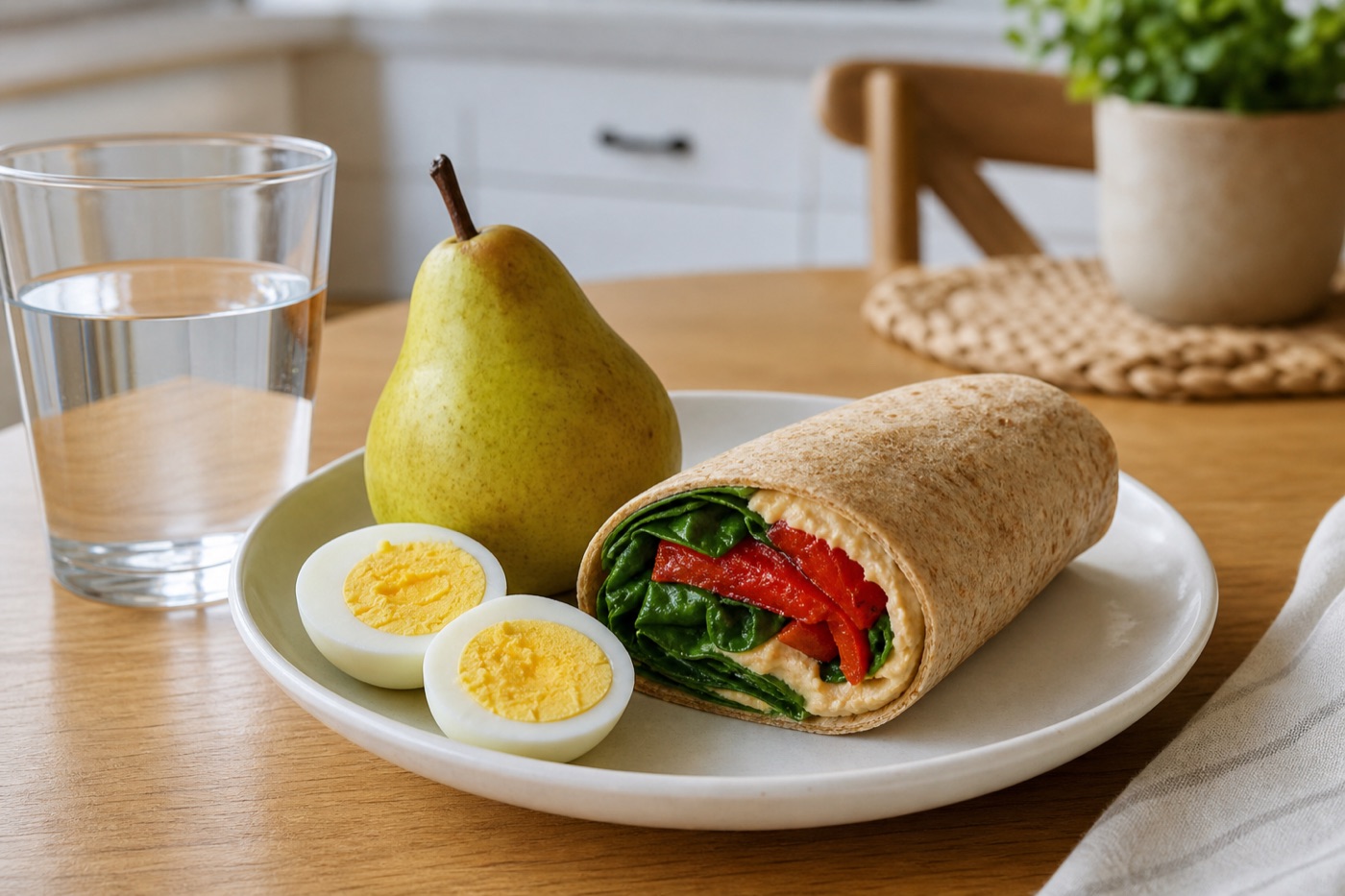
Put together, a steady-energy day might be oatmeal with milk, walnuts and a sliced banana at breakfast; a whole-grain wrap with hummus, chicken or beans and vegetables at lunch; a pear and a piece of cheese mid-afternoon; and fish or tofu with roasted vegetables and brown rice for dinner. None of it is fancy, and each meal mixes fuel with staying power.
The same principles that help energy also help keep blood sugar on an even keel; our article on eating to keep blood sugar steady explains the plate method and smart carbohydrate swaps.
Caffeine and sweets: use, don’t lean on
Coffee and tea can give a helpful lift. The FDA notes that up to 400 milligrams of caffeine a day, roughly four or five cups of coffee, is not generally linked to dangerous effects in healthy adults. Caffeine late in the day can disrupt sleep, though, which leaves you more tired tomorrow. Try to have your last cup by early afternoon.
Sugary snacks and drinks give a quick burst of energy that often fades just as quickly. If you want something sweet, pair it with protein or fiber, such as dark chocolate with a handful of nuts, or fruit with yogurt. Energy drinks can contain large amounts of caffeine and sugar and aren’t a good everyday fix.
When food isn’t the problem
If you’re eating well and sleeping enough but still feel exhausted, talk to your doctor. Persistent fatigue can have many causes, including:
- Iron-deficiency anemia. Fatigue and weakness are common symptoms, and the risk is higher for people with heavy periods, during pregnancy and for some vegetarians. See our guide to getting more iron from food.
- Vitamin B12 deficiency, more common in older adults and people who eat no animal foods.
- Thyroid problems, sleep apnea, depression and other conditions.
- Medication side effects.
A simple blood test can rule some of these in or out. Don’t start iron supplements without testing, since too much iron can be harmful.
Quick recap
Eat regular meals and snacks that pair fiber-rich carbs with protein and a bit of fat, keep water nearby, enjoy caffeine early rather than late, and treat sweets as a sometimes food. If tiredness persists despite good habits, see your doctor to check for iron deficiency, B12 deficiency or other causes.
Common questions
What should I eat for energy in the afternoon?
A snack that combines fiber-rich carbohydrate with protein or fat, such as an apple with cheese, yogurt with berries, or whole-grain crackers with hummus, tends to give energy that lasts. Pair it with a glass of water.
Why do I feel tired after lunch?
A natural dip in alertness in the early afternoon is common. A very large lunch or one built mostly on refined carbohydrates can make it more noticeable, as can short sleep the night before.
Can low iron make you tired?
Yes. Fatigue and weakness are common symptoms of iron-deficiency anemia, according to the NIH Office of Dietary Supplements. If you're tired all the time, ask your doctor about a blood test rather than starting supplements on your own.
Sources
Naomi edits Nutrition for Everybody and writes the app rankings. She cares most about advice that still works on a Tuesday night with a tired family and a half-empty fridge.