Eating to Keep Blood Sugar Steady
To keep blood sugar steady, fill half your plate with non-starchy vegetables, pick high-fiber carbs, pair them with protein and eat at regular times.
On this page
To keep blood sugar steady, build meals around non-starchy vegetables, choose carbohydrates that come with fiber, pair them with protein and some healthy fat, and eat at fairly regular times instead of going long stretches without food. Limiting sugary drinks and refined starches and moving your body after meals helps too. These habits are useful for everyone, and especially for people with prediabetes or diabetes, who should also follow their health care team’s advice.
How food affects blood sugar
When you eat carbohydrates, from bread, rice, potatoes, fruit, milk or sweets, your body breaks them down into glucose, which enters your bloodstream. Insulin helps move that glucose into your cells for energy.
How quickly and how high blood sugar rises depends on several things:
- The amount of carbohydrate in the meal
- The type of carbohydrate. Refined starches and sugars are absorbed quickly; whole grains, beans and whole fruit are absorbed more slowly.
- Fiber, protein and fat in the meal, which slow digestion
- How the food is prepared. Whole and minimally processed foods usually raise blood sugar more gently than finely ground or very processed versions.
The plate method
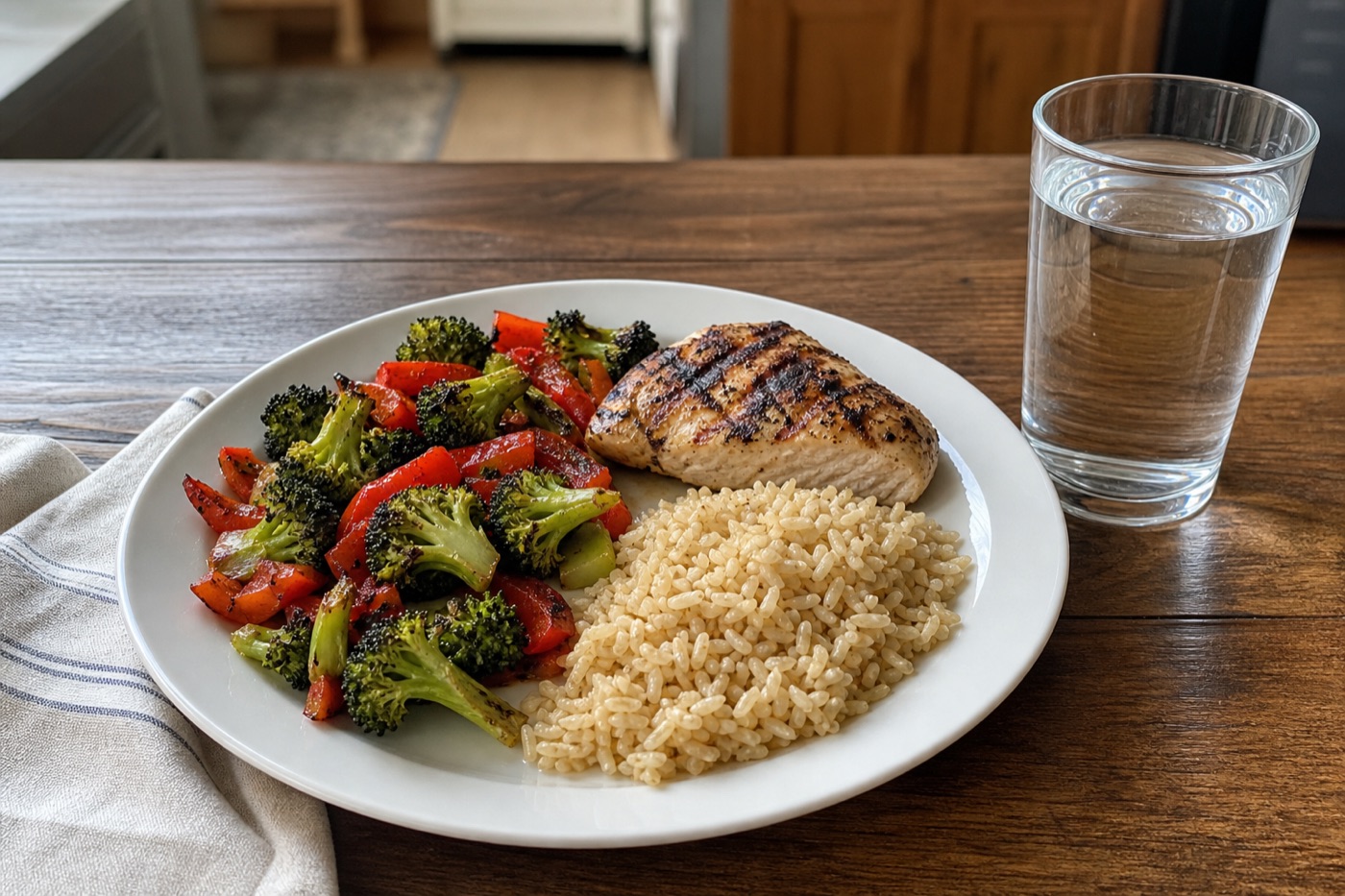
The American Diabetes Association’s Diabetes Plate Method is one of the simplest ways to build a balanced meal, no counting required. Using a 9-inch plate:
- Fill half with non-starchy vegetables, such as salad greens, broccoli, green beans, peppers, cauliflower, carrots, mushrooms or tomatoes.
- Fill one quarter with lean protein, such as chicken, fish, eggs, tofu, beans or lean meat.
- Fill one quarter with carbohydrate foods, such as whole grains, starchy vegetables like potatoes or corn, beans, fruit or milk.
- Choose water or a zero-calorie drink.
The large share of vegetables adds fiber and volume, while keeping the starchy portion to a quarter of the plate naturally moderates the amount of carbohydrate.
Choosing carbohydrates
You don’t need to cut out carbohydrates, but the kind you choose matters. Simple swaps can make a noticeable difference. Approximate values from USDA FoodData Central:
| Instead of | Try | Why it helps |
|---|---|---|
| 1 cup apple juice (about 28 g carbs, under 1 g fiber) | 1 medium apple (about 25 g carbs, 4 g fiber) | Fiber slows the sugar’s absorption |
| 1 cup cooked white rice (under 1 g fiber) | 1 cup cooked brown rice (about 3 g fiber), or half rice and half beans | More fiber per serving |
| White bread | 100% whole-grain bread | More fiber and nutrients |
| Sweetened breakfast cereal | Plain oatmeal with nuts and berries | Less added sugar, more fiber and protein |
| 12 oz regular soda (about 39 g sugar) | Water, sparkling water or unsweetened tea | Removes a fast hit of sugar entirely |
| Potato chips | A handful of nuts or popcorn | More fiber or healthy fat |
Labels help you spot added sugars; our guide to the many names of added sugar lists them, and our article on telling if a food is really whole grain explains what to look for on bread and cereal packages.
Timing, pairing and portions
Eat regularly. Skipping meals can lead to big swings, especially if you then eat a large, carb-heavy meal. Many people do well with three meals a day and a snack if there’s a long gap.
Don’t eat carbs alone. Pair them with protein or fat: an apple with peanut butter, crackers with cheese, toast with an egg, yogurt with nuts.
Watch portions of starchy foods. A cup of pasta or rice is easy to double without noticing. Using the plate method or measuring a few times helps you learn what a reasonable portion looks like.
Spread carbohydrates through the day rather than eating most of them at one meal. For steady energy between meals, our guide to foods for steady energy has more ideas.
Movement and drinks
Physical activity helps your muscles take up glucose, both during exercise and for hours afterward. A short walk after meals is an easy habit to start. Federal activity guidelines recommend at least 150 minutes a week of moderate activity for adults, plus muscle-strengthening work on two days.
Sugar-sweetened drinks are one of the fastest ways to spike blood sugar, so water should be your everyday drink. Alcohol can affect blood sugar in either direction and can cause dangerous lows in people who take insulin or certain diabetes medications, so check with your doctor about whether and how it fits.
If you have diabetes or prediabetes
The tips here are general. If you have diabetes or prediabetes, work with your doctor, a registered dietitian or a diabetes care and education specialist on a plan that fits your medications, activity and goals. Many people with prediabetes can lower their risk of type 2 diabetes through lifestyle changes, and the CDC-led National Diabetes Prevention Program offers structured support in many communities and online.
The takeaway
Fill half your plate with non-starchy vegetables, choose fiber-rich carbohydrates in moderate portions, pair them with protein and healthy fat, eat on a regular schedule, and replace sugary drinks with water. Add some movement after meals. Small, consistent habits do more for steady blood sugar than any single food.
Common questions
What foods keep blood sugar stable?
Non-starchy vegetables, beans and lentils, whole grains, nuts, seeds and protein foods tend to cause gentler rises in blood sugar. Pairing carbohydrate foods with protein, fat and fiber slows digestion and smooths the response.
Is fruit bad for blood sugar?
Whole fruit can be part of eating for steady blood sugar. Its fiber slows how quickly the sugar is absorbed, so a piece of fruit is a better choice than fruit juice, which delivers a lot of sugar quickly.
Does walking after meals help blood sugar?
Physical activity helps muscles use glucose, and many people find a short walk after eating helps. If you take insulin or medications that can cause low blood sugar, ask your health care team how to plan activity.
Sources
Naomi edits Nutrition for Everybody and writes the app rankings. She cares most about advice that still works on a Tuesday night with a tired family and a half-empty fridge.