Eating Well During Pregnancy: The Basics
In pregnancy you need extra folic acid, iron, calcium and iodine, a few hundred extra calories later on, low-mercury fish, careful food handling and no alcohol.
On this page
Eating well during pregnancy means focusing on nutrient-rich foods rather than simply eating more. You need extra folic acid, iron, calcium, iodine and choline, usually covered by a balanced diet plus a prenatal vitamin, and only a modest calorie increase in the second and third trimesters. Fish low in mercury is encouraged, some foods need extra care to avoid infection, caffeine should be limited, and alcohol avoided entirely. Your OB-GYN is the best guide for your own needs.
How many extra calories?
The idea of “eating for two” overstates it. For a single pregnancy, ACOG gives this general guide:
| Stage | Extra calories per day |
|---|---|
| First trimester | Usually none |
| Second trimester | About 340 |
| Third trimester | About 450 |
That’s roughly the difference of a substantial snack, such as a yogurt with fruit and a handful of nuts, or a sandwich with a glass of milk. Needs differ with pre-pregnancy weight, activity and twins or more, and ACOG also publishes recommended weight-gain ranges based on pre-pregnancy body mass index. Your OB-GYN can tell you which range applies to you.
Nutrients that matter most
These figures come from the NIH Office of Dietary Supplements and ACOG:
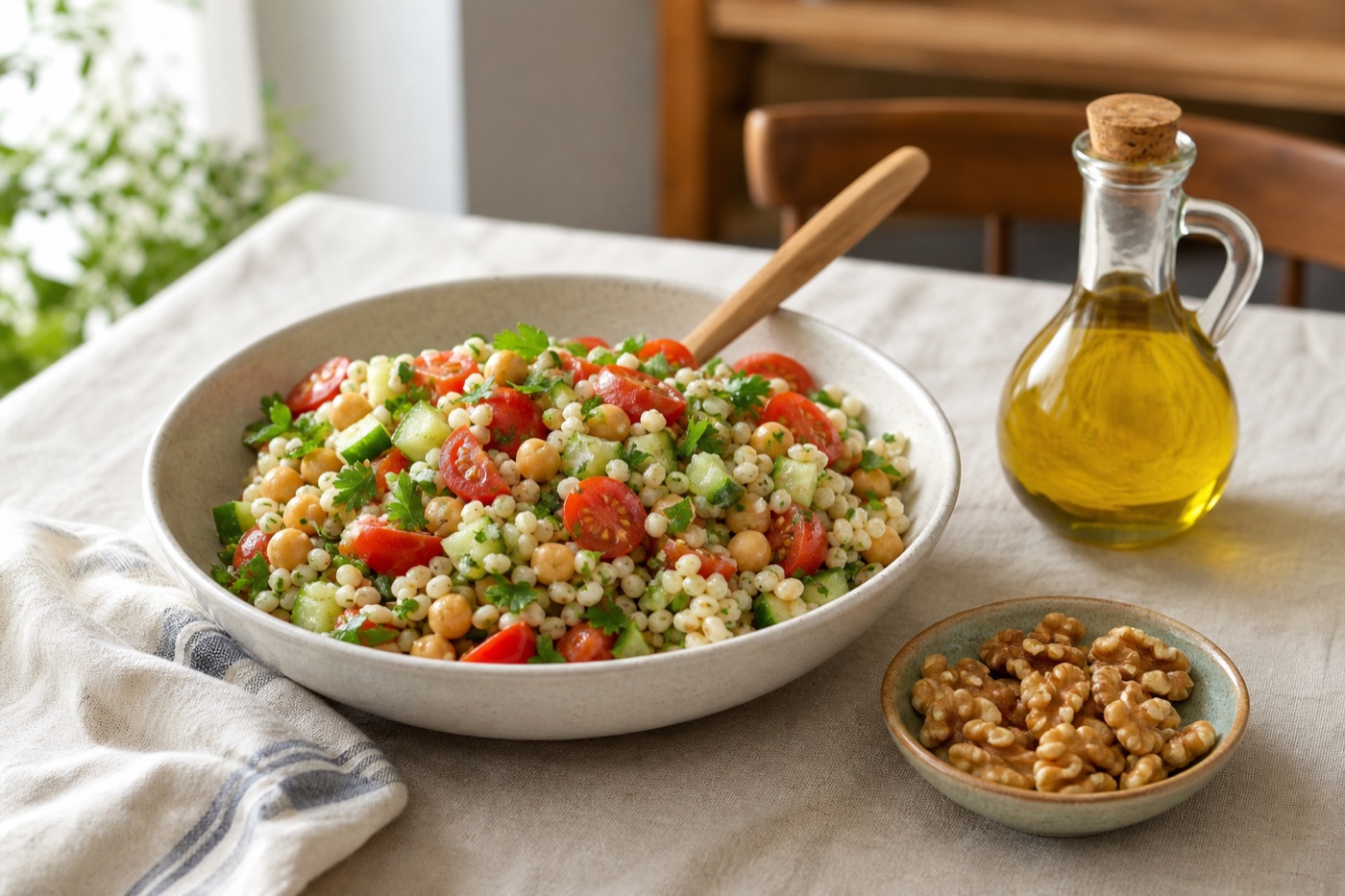
- Folic acid (folate). Helps prevent neural tube defects. Anyone who could become pregnant is advised to take 400 micrograms of folic acid daily, starting before pregnancy. During pregnancy, ACOG recommends 600 micrograms a day from all sources. Fortified cereals, beans, lentils, leafy greens and citrus all contribute.
- Iron. Supports the extra blood your body makes. The RDA in pregnancy is 27 milligrams a day. Lean meat, poultry, fish, beans, lentils and iron-fortified cereals are good sources; pairing plant sources with vitamin C helps absorption. See our guide to getting more iron from food.
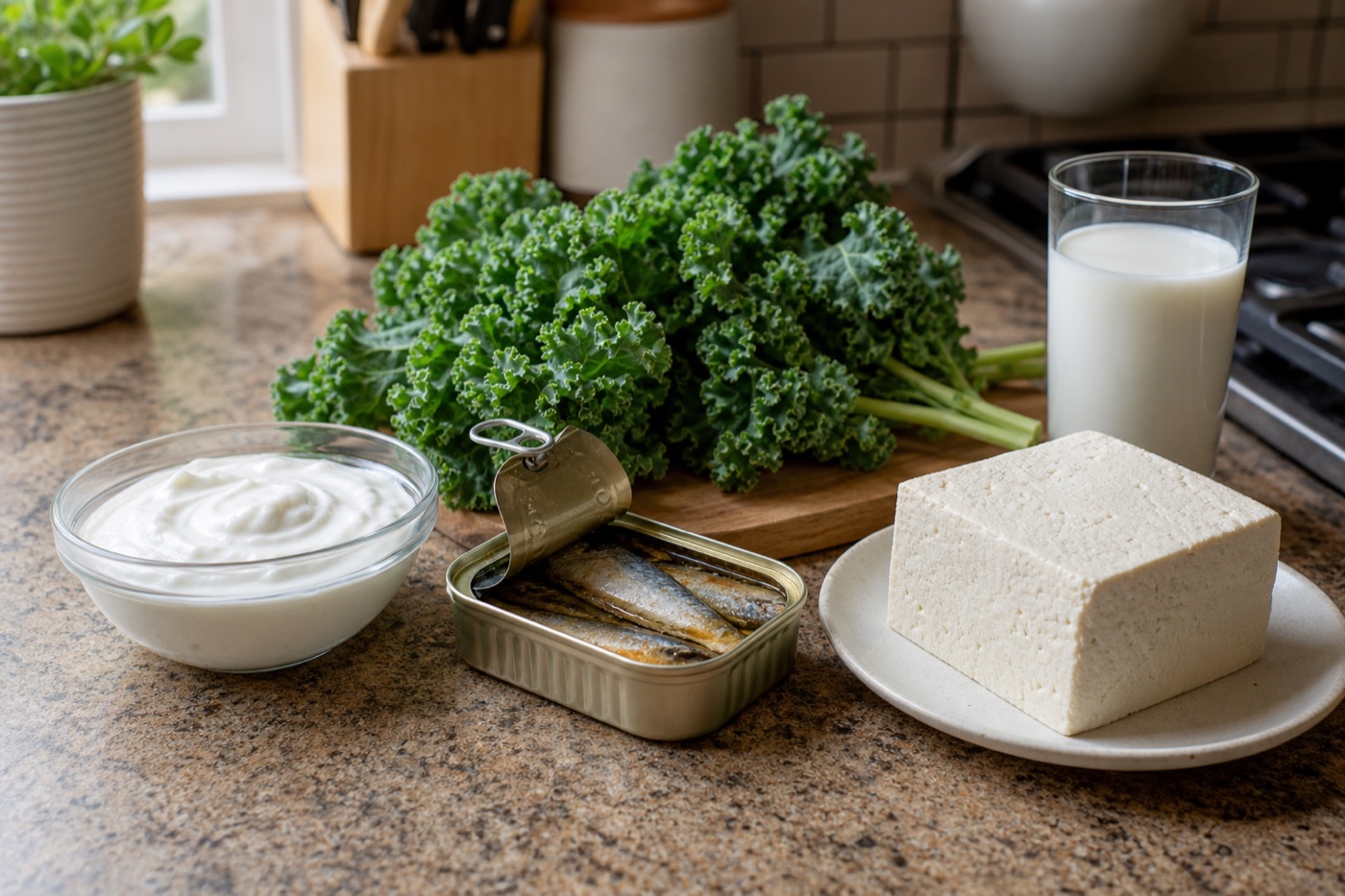
- Calcium. 1,000 milligrams a day (1,300 if you’re 18 or younger) for your baby’s bones and your own. Milk, yogurt, cheese, fortified plant milks and calcium-set tofu help you get there.
- Vitamin D. 600 IU (15 micrograms) a day. Fortified milk, fatty fish and eggs provide some.
- Iodine. 220 micrograms a day for your baby’s brain development. Dairy, eggs, seafood and iodized salt are sources; check whether your prenatal vitamin contains iodine.
- Choline. An adequate intake of 450 milligrams a day. Eggs, meat, fish, dairy and beans contain it, and many prenatal vitamins have little, so food matters.
- Omega-3 fats (DHA). Important for brain and eye development. Fatty fish is the richest food source.
ACOG recommends taking a prenatal vitamin. Don’t add other supplements without asking your OB-GYN, since more isn’t better for some nutrients, including vitamin A.
Fish: a good choice, with limits
Fish provides protein, omega-3 fats, iodine and other nutrients during pregnancy. The FDA and EPA advise pregnant and breastfeeding people to eat between 8 and 12 ounces weekly, which is two to three servings, from low-mercury options. “Best choices” include salmon, shrimp, cod, tilapia, sardines, pollock, catfish and canned light tuna.
Skip the species highest in mercury: shark, swordfish, king mackerel, marlin, bigeye tuna, orange roughy, and tilefish caught in the Gulf of Mexico. For more detail, see our guide to fish and seafood.
Foods to skip or handle with care
Pregnancy makes you more vulnerable to some foodborne infections, including listeria, which can harm a baby. Food safety guidance from FSIS and the FDA includes:
- Skip unpasteurized milk and juice, and soft cheeses such as queso fresco, brie, camembert, feta and blue-veined cheeses unless the label says they’re made with pasteurized milk.
- Heat hot dogs, deli meats and lunch meats until steaming hot (165°F) before eating.
- Avoid refrigerated smoked seafood like lox unless it’s an ingredient in a cooked dish such as a casserole; canned or shelf-stable versions are fine.
- Cook meat, poultry, eggs and seafood thoroughly. Use a food thermometer, and skip raw or runny eggs, raw cookie dough and raw fish such as sushi made with uncooked fish.
- Avoid raw sprouts, such as alfalfa and mung bean sprouts.
- Wash fruits and vegetables well under running water.
Caffeine and alcohol
ACOG advises limiting caffeine to less than 200 milligrams a day. That’s about one 12-ounce cup of coffee, though the amount varies widely by brew. Tea, soda, energy drinks and chocolate count too. Our article on caffeine and how much is too much gives typical amounts.
Alcohol is different: there is no known safe amount during pregnancy, so ACOG and federal health agencies advise avoiding it completely. That includes wine, beer and spirits.
Easing nausea and heartburn
Many people struggle with nausea early on and heartburn later. These steps often help:
- Eat small meals every few hours so your stomach is never empty.
- Keep plain crackers or dry toast by the bed for the morning.
- Try cold foods if smells bother you.
- Sip fluids between meals rather than with them.
- Avoid lying down right after eating, and go easy on greasy or spicy foods.
Call your OB-GYN if you can’t keep food or fluids down, are losing weight, or feel dizzy; severe vomiting needs medical care.
The bottom line
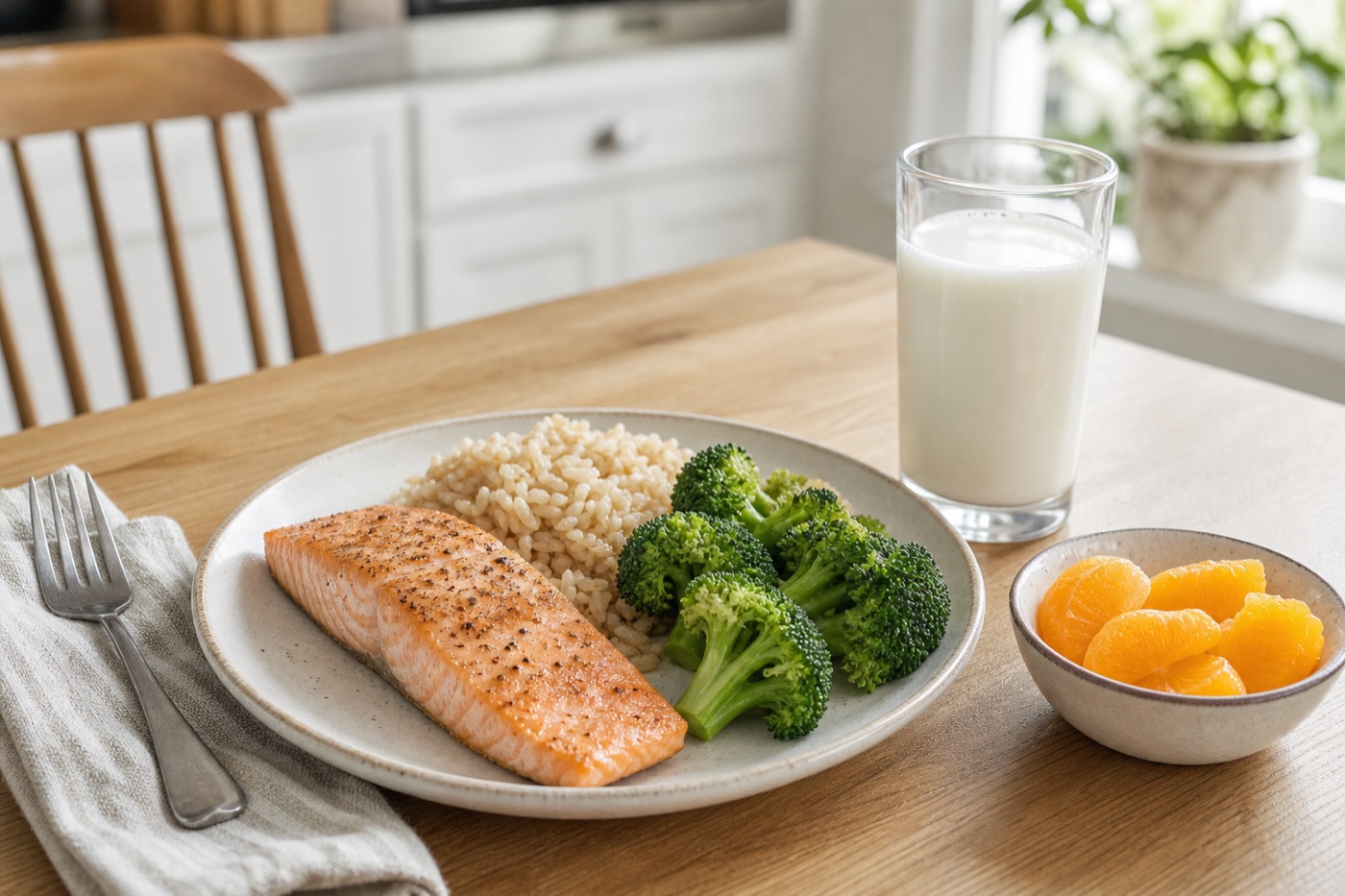
Focus on quality over quantity: a variety of fruits, vegetables, whole grains, protein foods and dairy or fortified alternatives, plus a prenatal vitamin. Eat low-mercury fish two to three times a week, handle food carefully, keep caffeine under 200 milligrams, and skip alcohol entirely. Bring any questions about diet, weight gain or supplements to your OB-GYN or a registered dietitian.
Common questions
Do I need to eat for two during pregnancy?
No. According to ACOG, most people need no extra calories in the first trimester, about 340 extra a day in the second and about 450 extra in the third, for a single pregnancy. Your OB-GYN may adjust that for you.
How much caffeine is safe during pregnancy?
ACOG advises keeping caffeine under 200 milligrams a day, roughly the amount in a 12-ounce cup of coffee. Remember that tea, soda, energy drinks and chocolate contain caffeine too.
Can I eat fish while pregnant?
Yes, and it's encouraged. Federal fish advice for pregnancy calls for two to three servings a week of low-mercury picks, for example salmon, shrimp, cod, canned light tuna and sardines, and steering clear of the few high-mercury species such as shark and swordfish.
Is a small amount of alcohol OK during pregnancy?
No. There is no known safe amount of alcohol during pregnancy, and ACOG advises avoiding it completely. If you drank before you knew you were pregnant, talk with your OB-GYN.
Sources
Ruth covers nutrition through life stages and everyday health, from feeding school-age kids to eating well after sixty.