How to Pick a Healthier Frozen Meal
A healthier frozen meal has a realistic serving, moderate sodium, decent protein and fiber, and real vegetables. Here's what to check and how to round it out.
On this page
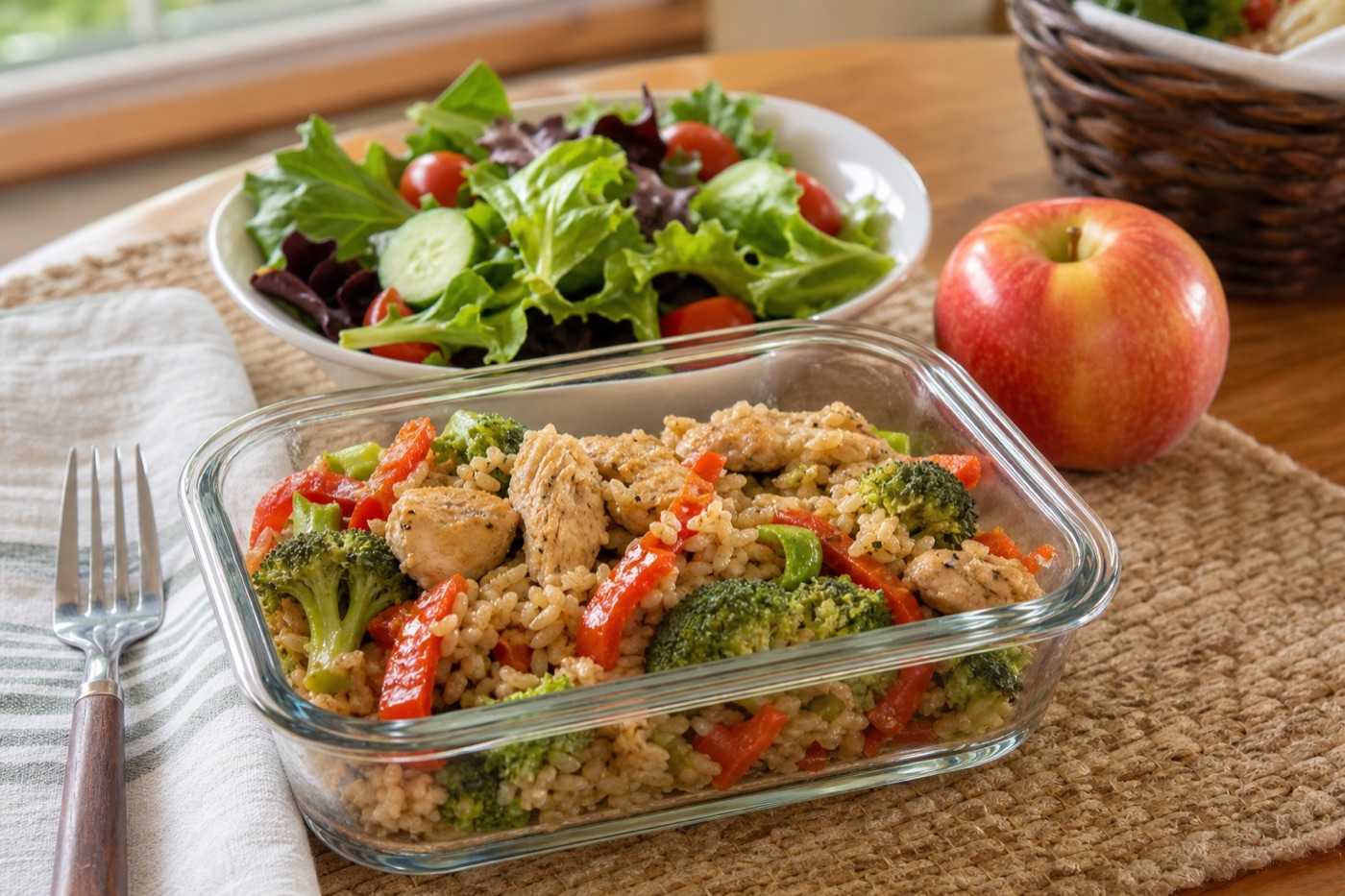
The healthier frozen meals are the ones with a realistic serving (often the whole tray), moderate sodium, a reasonable amount of protein and some fiber, and vegetables you can actually see. The Nutrition Facts label and the ingredient list tell you all of that in under a minute. Add a piece of fruit or a quick side salad and a frozen entrée becomes a respectable weeknight dinner or work lunch.
What to check on the label
1. How many servings are in the box
Most single-serve trays are labeled as one serving, but bowls, skillet meals and family-size entrées often contain two or more. Some packages show two columns, one per serving and one for the entire container. If you’ll eat the whole thing, read the per-package column or multiply. Everything else on the label depends on this step.
2. Sodium, the number to watch
Frozen meals vary enormously in sodium, even within the same type of dish, so comparison is your best tool. FDA’s rule of thumb is that 5% of the Daily Value or less is low and 20% or more is high. Plenty of prepared entrées land in the high range, which isn’t automatically a deal-breaker for a full meal, but it’s worth knowing so you can keep the rest of the day lighter. When two similar meals sit side by side, pick the one with the lower %DV.
Front-of-box words help only so much. “Reduced sodium” means at least 25% less than the regular version, which can still be plenty. For a full explanation of the percentages, see what the % Daily Value means.
3. Protein and fiber for staying power
A meal that’s mostly pasta or rice in sauce may leave you hungry an hour later. Look for a clear protein source, such as chicken, fish, beans, lentils, tofu, eggs or lean beef, and compare the grams on similar products. If one bowl lists 10 grams of protein and another lists 20, the second is likely to keep you fuller.
Fiber works the same way. Whole grains, beans and vegetables near the top of the ingredient list are good signs.
4. Vegetables you can see
The photo on the box is labeled a “serving suggestion” for a reason. The ingredient list tells you whether vegetables are a main component or a garnish. Meals where broccoli, peppers, spinach, beans or squash appear among the first several ingredients give you more nutrition per tray.
5. Saturated fat and added sugars
Creamy or cheesy sauces, breaded and fried components, and sweet glazes such as teriyaki or orange sauce tend to push up saturated fat and added sugars. Check those two lines against the 5% and 20% markers too.
A quick scorecard
These are practical rules of thumb, not official cutoffs:
| What to check | Better sign | Worth a second look |
|---|---|---|
| Servings per container | 1, or you plan to share | 2 or more and you’ll eat it all |
| Sodium | lowest %DV among similar meals | a third or more of the day’s DV in one tray |
| Protein | a clear protein source and a solid number of grams | mostly noodles or rice with a little sauce |
| Fiber | whole grains, beans or vegetables high on the list | only refined grains |
| Vegetables | visible and near the top of the ingredients | a sprinkle on top |
| Saturated fat and added sugars | under 20% DV each | rich sauces or sweet glazes with high %DV |
Round out the plate
Even a good frozen meal is often light on produce. Easy additions:
- A side salad from bagged greens with a simple vinaigrette
- A cup of steamed frozen broccoli, green beans or mixed vegetables
- A piece of fruit, such as an apple, a pear or a handful of grapes
- A glass of milk or a small cup of plain yogurt
- A small handful of nuts
You can also stretch the meal itself: stir a cup of frozen vegetables into a pasta or rice entrée while it heats. If you often take frozen meals to the office, our guide to healthy lunches for work has more ideas.
Heat it safely
Follow the package directions every time, especially the standing time, which lets heat spread through the food. Microwaves vary in power, so stir partway through if directed and check that the center is steaming hot. USDA’s Food Safety and Inspection Service recommends using a food thermometer to confirm reheated foods reach 165°F. Some frozen products, particularly breaded or stuffed chicken items, can look browned and cooked but are actually raw inside; the label will say so, and those must be cooked fully. Keep frozen meals frozen until you’re ready to cook them rather than thawing them on the counter.
Keep a few good ones on hand
There’s no need to feel guilty about frozen meals. Find two or three that pass the label check, keep them in the freezer for busy nights, and pair each one with a quick vegetable or fruit. That’s a practical, balanced backup plan.
Common questions
Are frozen meals unhealthy?
Not inherently. Freezing preserves food well, and some frozen entrées are balanced and moderate in sodium. It comes down to the recipe, which is why the label is worth a quick read.
Can I freeze my own meals instead?
Yes, and it gives you full control over salt and ingredients. Cook a batch of soup, chili or a casserole, cool it quickly in shallow containers, freeze single portions, and reheat them to 165°F.
Is it safe to cook a frozen meal in the oven instead of the microwave?
Usually, if the package includes oven directions and the tray is oven-safe. Follow the stated time and temperature, and check that the center of the food reaches 165°F.
Sources
Elliot writes about foods, labels and the grocery store, from choosing a cereal to stretching a budget without giving up vegetables.