Healthy Lunches to Take to Work
A work lunch that keeps you full pairs a protein with a whole grain and plenty of vegetables. Get packable ideas, food safety basics and a make-ahead routine.
On this page
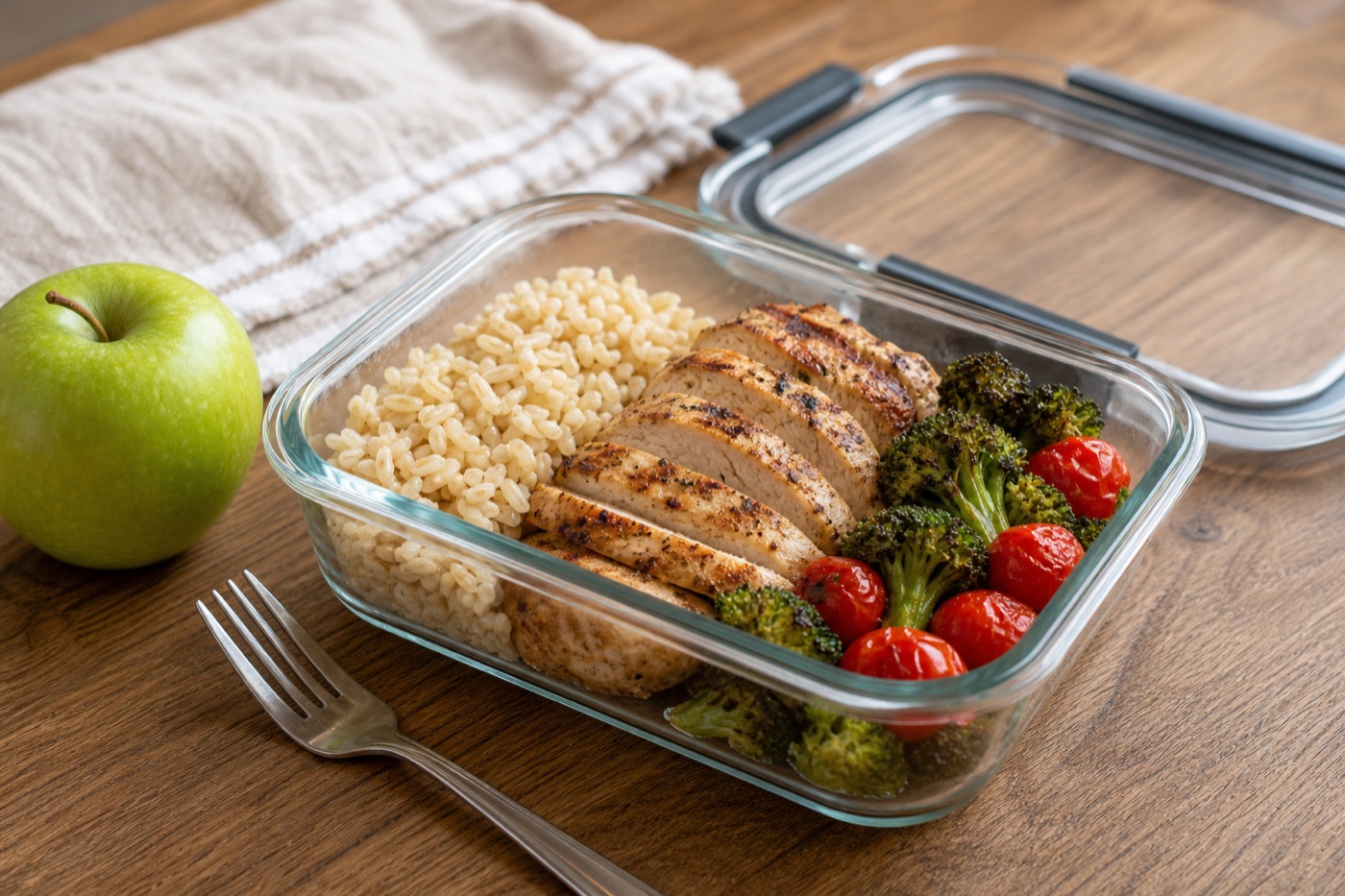
A healthy work lunch has three building blocks: a protein, a fiber-rich carbohydrate and at least one generous serving of vegetables or fruit, plus something tasty that makes you want to eat it. Pack it so it stays cold until noon, and prepare the parts for several days at once so weekday mornings stay simple.
A formula that works almost every time
Instead of hunting for a new recipe each week, think in parts. Pick one from each line and you have lunch.
- Protein: grilled or roasted chicken, hard-boiled eggs, canned tuna or salmon, beans or lentils, tofu, plain Greek yogurt, cottage cheese
- Fiber-rich carb: brown rice, quinoa, farro, whole-wheat pasta, a whole-grain wrap or bread, a baked potato
- Produce (aim for about half the container): leafy greens, roasted vegetables, raw crunchy vegetables, a piece of fruit
- Flavor: a vinaigrette, hummus, pesto, salsa, a sprinkle of cheese, a few nuts or some avocado
The protein and fiber do most of the work of keeping you full through the afternoon. The flavor element is what keeps you from abandoning the plan by Wednesday.
Ten lunches that travel well
Protein amounts are rough estimates based on USDA FoodData Central and will change with your portions and ingredients.
| Lunch | What goes in it | Protein (about) |
|---|---|---|
| Chicken grain bowl | 3 oz chicken, 1/2 cup brown rice, roasted peppers and zucchini, vinaigrette | 28 g |
| Lentil salad | 1 cup cooked lentils, cucumber, tomato, red onion, 1 oz feta | 22 g |
| Tuna and white bean salad | 3 oz canned tuna, 1/2 cup white beans, celery, lemon, olive oil | 25 g |
| Snack-style box | 2 hard-boiled eggs, hummus, whole-grain crackers, carrots, grapes | 16 g |
| Yogurt bowl with a side of nuts | 6 oz plain Greek yogurt, berries, 1 oz almonds | 23 g |
| Black bean burrito bowl | 1 cup black beans, rice, corn, salsa, shredded lettuce | 20 g |
| Tofu stir-fry | 3 oz firm tofu, mixed vegetables, brown rice | 17 g |
| Chickpea pasta salad | 1 cup whole-wheat pasta, 1/2 cup chickpeas, spinach, olives | 15 g |
| Turkey and avocado wrap | Sliced turkey, avocado, greens, whole-wheat tortilla | 20 g |
| Leftover chili | 1 1/2 cups bean-and-meat chili, a side of fruit | 20–25 g |
If a big salad is more your style, our guide to building a salad that actually fills you up explains how to give it enough staying power.
Keep it safe until lunchtime
Bacteria multiply fastest between 40°F and 140°F, a range the USDA Food Safety and Inspection Service calls the “Danger Zone.” A few habits keep a packed lunch out of it:
- Start cold. Pack food straight from the refrigerator, or assemble it the night before and refrigerate it.
- Use two cold sources. An insulated bag with two ice packs, or one ice pack and a frozen water bottle, keeps perishables chilled for the morning.
- Mind the clock. Perishable food shouldn’t sit at room temperature for more than 2 hours, or 1 hour if it’s above 90°F.
- Use the office fridge if there is one. Put your lunch in as soon as you arrive.
- Reheat thoroughly. Leftovers should reach 165°F. In the microwave, cover the container, stir halfway and let it stand a minute so the heat spreads evenly.
- Toss what’s left. Food that has ridden around all day unrefrigerated isn’t worth saving.
For hot food without a microwave, fill an insulated food jar with boiling water for a few minutes, empty it, then add steaming soup or stew.
A make-ahead routine
One session of 45 minutes or so on the weekend can cover three or four lunches:
- Cook a pot of grains.
- Roast one or two trays of vegetables.
- Cook a protein, such as a batch of chicken thighs, a pot of lentils or a dozen hard-boiled eggs.
- Wash and dry greens and keep them wrapped in a towel in a container.
- Shake a jar of dressing.
Store the parts separately and assemble each lunch the night before. Keeping dressing and wet ingredients apart until you eat prevents soggy results. Cooked food keeps 3 to 4 days in the refrigerator, so plan a second mini-prep midweek or freeze a couple of portions.
Dinner can also do double duty. When you plan the week, make one or two recipes in a larger batch on purpose; our guide to planning a week of dinners shows how to build those leftovers in.
Make lunch worth stopping for
Eating at your desk while answering email is common, but stepping away for even 15 minutes lets you actually notice the food and how full you feel. If that isn’t realistic every day, aim for a few days a week.
Pack a small afternoon snack too, especially if dinner is late. A piece of fruit with cheese, a handful of nuts or a yogurt can prevent the 4 p.m. vending machine run. Our guide to what makes a healthy snack has more combinations.
Lunch, simplified
Choose a protein, a whole grain or starchy vegetable, and plenty of produce, then add a sauce you like. Keep it cold with two ice packs, reheat leftovers to 165°F, and prep the parts once or twice a week. After a few rounds, packing lunch takes less time than deciding where to buy one.
Common questions
How do I keep a packed lunch cold without a fridge at work?
Use an insulated lunch bag with at least two cold sources, such as ice packs or a frozen water bottle, as the USDA Food Safety and Inspection Service recommends. Perishables left with no cold source at all are safe for only about two hours.
How many days ahead can I prep work lunches?
Cooked foods kept in the refrigerator are best eaten within 3 to 4 days. Prep on Sunday for Monday through Wednesday, then do a quick second round midweek or freeze a few portions.
What can I pack if I don't have a microwave?
Grain salads, bean salads, wraps, sandwiches and snack-style boxes all taste good cold. For something warm, preheat an insulated food jar with boiling water, then fill it with hot soup or chili in the morning.
Sources
Elliot writes about foods, labels and the grocery store, from choosing a cereal to stretching a budget without giving up vegetables.