How to Plan a Week of Dinners
Plan a week of dinners: check your schedule, use what's already in your kitchen, pick theme nights, cook extra on purpose and shop from a single list.
On this page
The easiest way to plan a week of dinners is to work backward from your calendar: decide which nights need a fast meal, use what’s already in the kitchen, choose about five simple dinners that share ingredients, and shop once from a single list. You don’t need a perfect menu, just a rough map that saves you from deciding what to cook at 6 p.m. every night.
The planning routine, step by step
1. Look at the week before you look at recipes
Start with what’s happening. Late meetings, practices, a night out, guests coming over? Busy evenings get the quickest meals: leftovers, eggs, something on a sheet pan. Calmer nights can handle a dish that simmers.
Plan five dinners rather than seven. The two spare nights absorb leftovers, an unexpected invitation or a night when nobody is hungry, and they keep groceries from going bad.
2. Shop your own kitchen
Open the fridge, freezer and pantry before you write anything down. Half a bag of spinach, a few sweet potatoes, a can of chickpeas, a bag of frozen shrimp: build the first two dinners of the week around whatever needs using soonest.
3. Pick a template
Theme nights shrink the question from “what should we eat?” to “which kind of tacos?” They also make the grocery list almost write itself, because the same categories come up every week.
4. Write one list, sorted by store section
Group items the way your store is laid out: produce, bakery, dairy and eggs, meat and fish, pantry, frozen. Note amounts, such as “2 lb chicken thighs” or “1 bunch kale,” so you buy what the recipes need and no more. A running list on the fridge for staples that run low makes this step faster. Our list of healthy pantry staples is a useful starting inventory.
A sample week
Here is one way a five-dinner week can look. Swap the dishes for ones your household likes; the structure is the useful part.
| Night | Theme | Example dinner | Shortcut |
|---|---|---|---|
| Sunday | Big cook | Roast chicken with potatoes and carrots | Roast extra chicken for later in the week |
| Monday | Meatless | Black bean and sweet potato tacos | Canned beans; microwave the sweet potato |
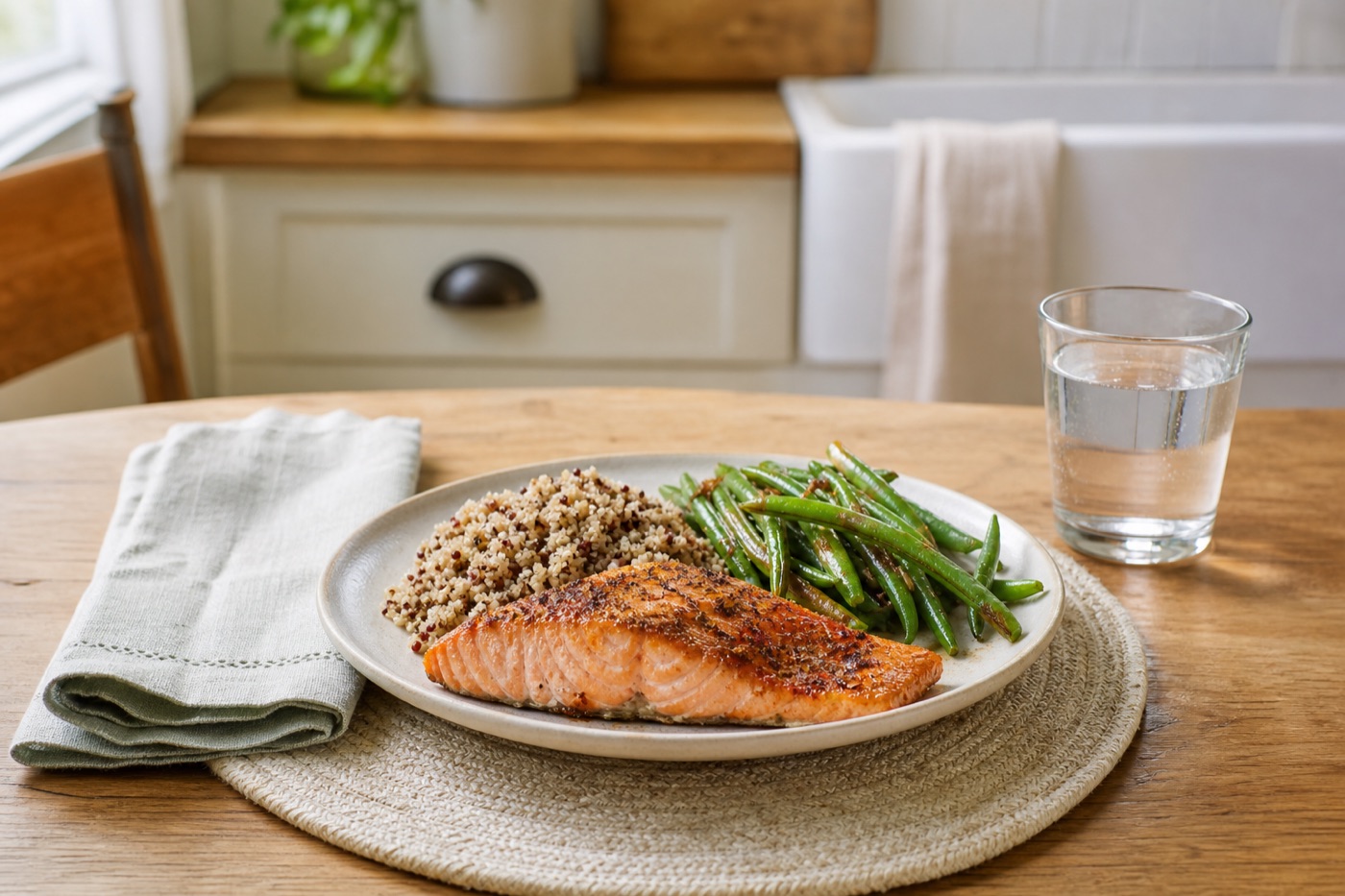
| Tuesday | Sheet pan | Salmon with broccoli and baby potatoes | Everything roasts at 425°F |
| Wednesday | Leftovers remix | Sunday’s chicken in grain bowls | Use rice cooked on Sunday |
| Thursday | Soup | Lentil and vegetable soup with bread | Double the batch and freeze half |
| Friday | Open | Eat out, freezer soup or a backup meal | Nothing to buy |
| Saturday | Open | Leftovers or something new you want to try | Shop on the weekend for next week |
Make each dinner balanced
MyPlate’s long-standing advice is to fill half your plate with fruits and vegetables, with the rest split between grains and protein. A quick check for each planned dinner:
- At least one vegetable, and ideally two
- A protein, rotating among beans, fish, poultry, eggs, tofu and lean meat
- A whole grain or a starchy vegetable such as potatoes, corn or squash
- Milk, yogurt or fruit on the side if it fits
Frozen vegetables count just as much as fresh and won’t wilt before Thursday. Soups are an especially forgiving way to use up produce; see our guide to soups and stews for more vegetables.
Prep that pays off
A little work on your shopping day makes weeknights noticeably easier:
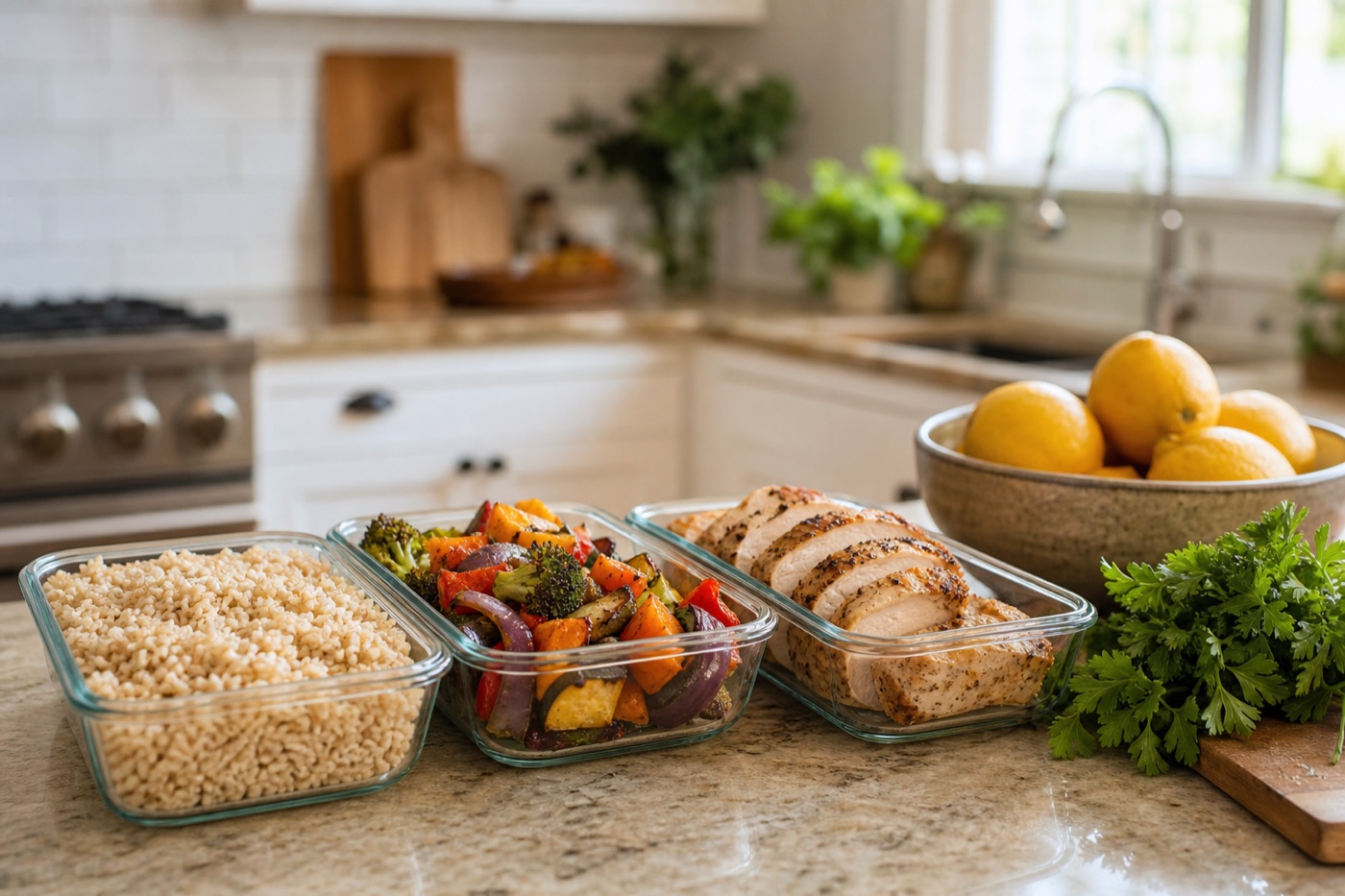
- Cook a pot of rice, quinoa or farro for two or three meals.
- Wash and chop sturdy vegetables like peppers, onions and carrots.
- Roast a tray of vegetables to add to bowls, eggs and wraps.
- Mix one sauce or dressing, such as a lemon-garlic vinaigrette or a yogurt-herb sauce.
- Portion raw meat or fish and freeze anything you won’t cook in the next day or two.
The USDA Food Safety and Inspection Service advises refrigerating cooked food within 2 hours and eating leftovers within 3 to 4 days, so plan your “cook once, eat twice” meals for early in the week. If you’d like to keep your weekly plan and portions on your phone, our calorie tracker app rankings compare the options.
When the plan falls apart
It will, sometimes. A sick kid, a late train or simple exhaustion can derail any menu. Instead of scrapping the plan, swap nights, push the more involved dinner to the weekend, and fall back on a meal you can make from storage:
- Scrambled eggs with toast and frozen spinach
- Whole-wheat pasta with canned white beans, garlic and frozen peas
- Bean and cheese quesadillas with salsa and a bagged salad
- A container of soup from the freezer
If you’re planning for a household of one, the same steps apply with smaller batches; our guide to cooking healthy meals for one covers scaling down.
Your next step
Pick one evening this week to try the routine: check the calendar, scan the fridge, choose five dinners and write a single list. After a few weeks, keep the plans that worked and rotate them, and the whole process gets faster each time.
Common questions
How many dinners should I plan for a week?
Five is a good number for most households. The two open nights soak up leftovers, an evening out or a change of plans, so you're not stuck with food that spoils before you get to it.
How long do cooked leftovers last in the fridge?
The USDA Food Safety and Inspection Service advises eating refrigerated leftovers within 3 to 4 days. If you won't get to them in time, freeze them, where they stay safe much longer.
What should I make on nights when the plan falls through?
Keep two or three backup meals that rely only on pantry and freezer items, like eggs with toast and frozen vegetables, or pasta with canned beans and greens. That way a busy night doesn't turn into a takeout night by default.
Sources
Naomi edits Nutrition for Everybody and writes the app rankings. She cares most about advice that still works on a Tuesday night with a tired family and a half-empty fridge.