Healthy Eating for School-Age Kids
School-age kids do best with regular meals and snacks from every food group, water and milk as the main drinks, and little added sugar. A guide for parents.
On this page
School-age kids, roughly 5 to 12, do best with three meals and one or two planned snacks a day that draw from every food group: fruits, vegetables, whole grains, protein foods and dairy or fortified alternatives. Water and milk should be the main drinks, with juice and sweets kept small. Just as important as what’s served is how: regular family meals and a no-pressure approach help kids build habits that last.
What a day of eating can look like
MyPlate’s advice to make half the plate fruits and vegetables works for kids just as it does for adults. Exact amounts shift with a child’s age, sex and how active they are, and the MyPlate Plan tool can show daily targets for your child. Here’s an example of how a school day can come together:
- Breakfast: oatmeal made with milk, topped with banana slices and a spoonful of peanut butter
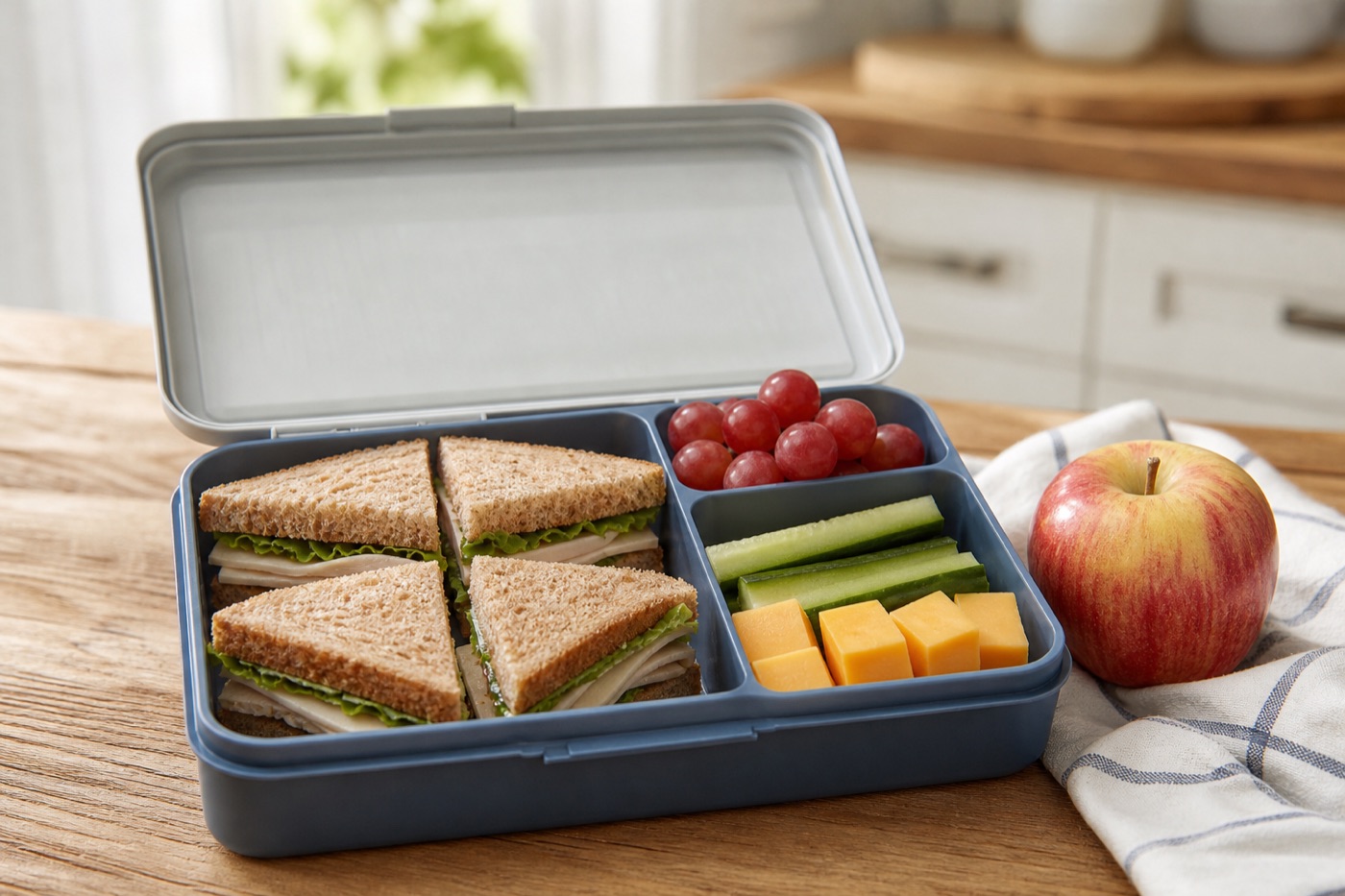
- Lunch: turkey and cheese on whole-wheat bread, cucumber sticks, grapes and water
- After-school snack: plain yogurt with berries, or whole-grain crackers with cheese
- Dinner: baked chicken, brown rice, roasted broccoli and a glass of milk
- Optional evening snack: an apple or a small bowl of whole-grain cereal with milk
Some days your child will eat a lot and other days very little. That’s normal; children’s appetites rise and fall with growth spurts and activity.
Breakfast and the school day
A morning meal helps kids concentrate and keeps them from arriving at lunch starving. It doesn’t have to be elaborate. A whole-grain waffle with peanut butter and fruit, eggs and toast, yogurt with cereal, or even a leftover burrito all work. Pairing a carbohydrate with some protein makes it last longer.
Many schools serve breakfast and lunch through federal meal programs, which must meet national nutrition standards. If you’re eligible, free or reduced-price meals can be a big help, and you can ask your school about how to apply.
Lunches and after-school snacks
For packed lunches, aim for a protein, a whole grain, a fruit and a vegetable, and include something your child enjoys so the lunch actually gets eaten. Use an insulated bag with ice packs for perishable foods.
After school, many kids are genuinely hungry. Plan snacks the way you’d plan a small meal, combining two food groups:
- Apple slices with cheese
- Whole-grain crackers with hummus
- Yogurt with fruit
- A half sandwich and a glass of milk
- Popcorn with a handful of nuts, for kids old enough to eat them safely
Our guide to what makes a healthy snack has more combinations.
Drinks: what kids need and what to limit
Drinks are one of the simplest places to improve a child’s diet. Water should be the go-to, with plain milk or a fortified unsweetened soy milk at meals.
The American Academy of Pediatrics recommends limiting 100% juice by age:
| Age | 100% juice limit per day |
|---|---|
| Under 1 year | None |
| 1–3 years | Up to 4 oz |
| 4–6 years | 4 to 6 oz |
| 7–18 years | Up to 8 oz (1 cup) |
Sugar-sweetened drinks such as soda, sweet tea, fruit drinks and sports drinks are a major source of added sugar for kids. The American Heart Association recommends that children ages 2 to 18 have less than 25 grams (about 6 teaspoons) of added sugar a day, and no more than 8 ounces of sugar-sweetened drinks a week. Learning to spot sugar on labels helps; our list of names for added sugar shows what to look for.
Energy drinks aren’t appropriate for children, and caffeinated drinks in general are best avoided.
Who decides what
Feeding goes more smoothly when the responsibilities are split. Parents decide which foods are offered, and when and where meals happen. Children decide whether to eat and how much. This takes pressure off everyone and helps kids learn to recognize hunger and fullness.
Some practical habits that follow from this:
- Serve family-style when you can and let kids serve themselves.
- Include at least one food your child usually eats at each meal.
- Skip clean-plate rules and bribes, including using dessert as a reward.
- Eat together, without screens, as often as you can.
- Talk about how foods help kids grow, play and think, rather than about weight.
If vegetables are a battleground, our article on getting kids to eat more vegetables covers patient, practical approaches.
When to check with the pediatrician
Check in with the pediatrician when a child eats a very limited range of foods, seems to be losing weight or isn’t growing as expected, has ongoing stomach complaints, or shows signs of worry about body size or eating. Food allergies, a vegetarian or vegan diet, or a medical condition are also good reasons to get individual advice from a pediatrician or registered dietitian.
In a nutshell
Offer regular meals and planned snacks from all the food groups, make water and milk the everyday drinks, keep juice and added sugar small, and trust your child to judge how much of it to eat. Eat together when you can. Those habits, repeated day after day, matter more than any single meal.
Common questions
How much juice can a school-age child have?
The American Academy of Pediatrics suggests no more than 4 to 6 ounces of 100% juice a day for children ages 4 to 6, and no more than 8 ounces for ages 7 to 18. Whole fruit is a better choice because it has fiber.
How much added sugar is OK for kids?
For kids from 2 through 18, the American Heart Association sets the bar at under 25 grams a day, roughly 6 teaspoons. Swapping soda and fruit drinks for water or milk is usually the quickest win.
Should I make my child finish everything on the plate?
No. Clean-plate rules can teach children to ignore their own fullness. Serve reasonable portions, leave the amount up to your child, and offer more if they're still hungry.
Sources
Elliot writes about foods, labels and the grocery store, from choosing a cereal to stretching a budget without giving up vegetables.