What Makes a Healthy Snack?
A healthy snack pairs produce or a whole grain with protein or healthy fat, sized to bridge the gap to your next meal. Here are 100- and 200-calorie ideas.
On this page
A healthy snack fills a real gap between meals and adds something useful to your day, usually a fruit, vegetable, whole grain or dairy food, paired with a little protein or healthy fat so it holds you over. Size matters too: a good snack sits somewhere between a nibble and a second lunch. If it keeps you comfortably satisfied for a couple of hours, it’s doing its job.
Start by asking what the snack is for
Snacks serve different purposes, and the best choice depends on which one you’re dealing with:
- Bridging a long gap, such as lunch at noon and dinner at 7. You’ll want something with protein and fiber that lasts.
- Fueling activity, like a run or a soccer practice. A bit of easy-to-digest carbohydrate helps.
- Filling in a food group you missed, such as fruit or dairy.
- Boredom, stress or habit. Here a glass of water, a short walk or a change of scenery sometimes works better than food. Our article on late-night snacking digs into the evening version of this.
A simple pairing formula
Pick one item from each column. The left side brings fiber, vitamins and volume; the right side brings staying power.
| Produce or whole grain | Protein or healthy fat |
|---|---|
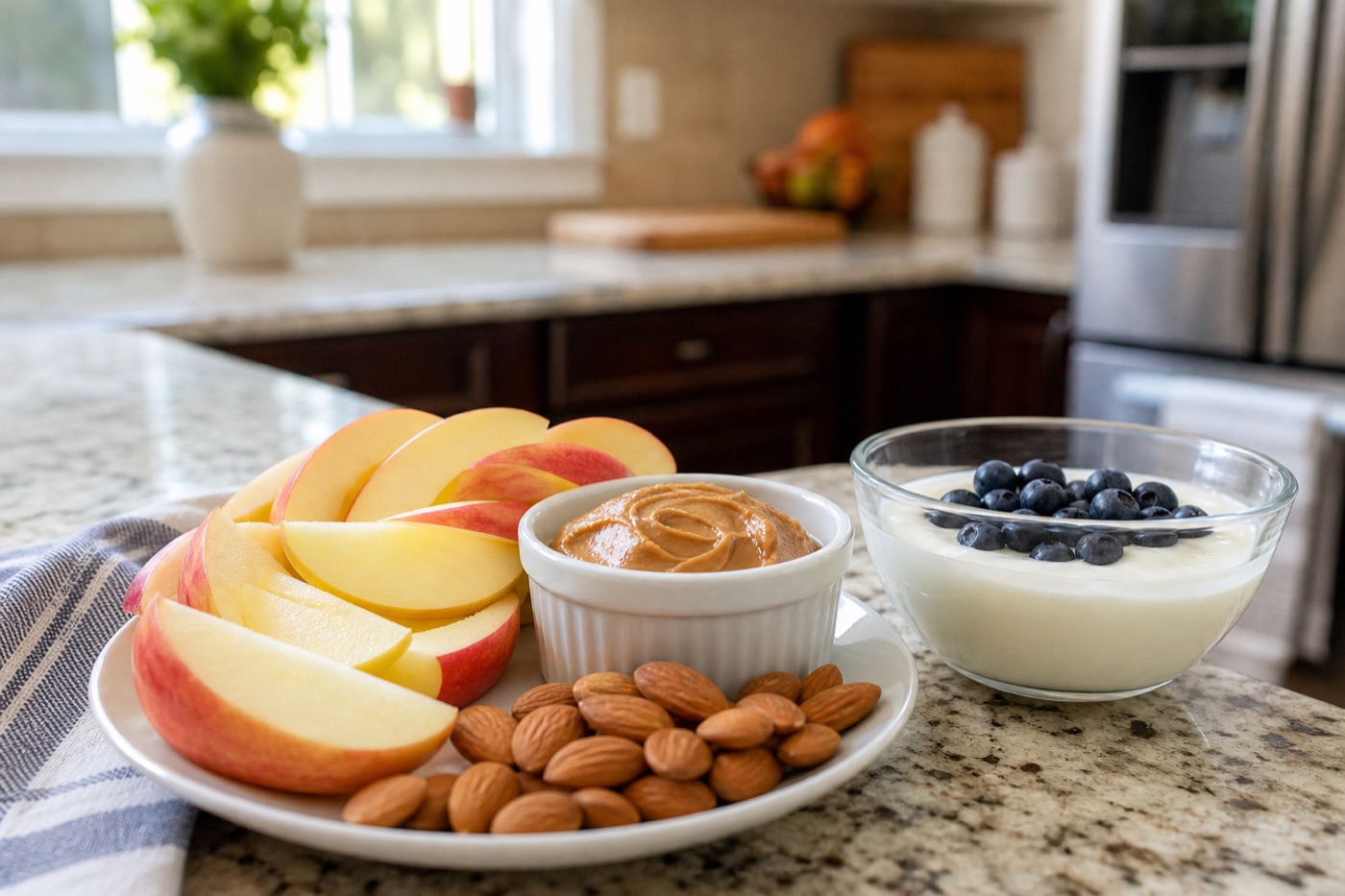
| Apple, pear or banana | Peanut or almond butter |
| Baby carrots, cucumber or bell pepper strips | Hummus |
| Berries or sliced peaches | Plain yogurt or cottage cheese |
| Whole-grain crackers | A slice of cheese |
| Air-popped popcorn | A small handful of nuts |
| Whole-grain toast | A hard-boiled egg |
Ideas by size
Approximate calories based on USDA FoodData Central. Portions are what make the difference, so it helps to measure a few times until you can eyeball them.
Around 100 calories
- 3 cups of air-popped popcorn: about 90–100 calories
- 1 hard-boiled egg with a handful of cherry tomatoes: about 90 calories
- 1 cup of baby carrots with 2 tablespoons of hummus: about 110–120 calories
- 1 part-skim mozzarella string cheese and a clementine: about 110 calories
- ½ cup of shelled edamame: about 95 calories, with roughly 9 grams of protein
Around 150 to 200 calories
- 1 small apple with 1 tablespoon of peanut butter: about 170 calories
- 1 ounce of almonds, about 23 nuts: about 165 calories
- 6 ounces of plain Greek yogurt with ½ cup of berries: about 140–210 calories, depending on fat level
- 1 slice of whole-grain toast with a quarter of an avocado mashed on top: about 160–180 calories
- 2 tablespoons each of peanuts and raisins mixed together: about 150–160 calories
Active teens, athletes and people with bigger appetites may need more; older adults with smaller appetites may need less.
Timing matters as well. Snacks tend to fit best in the long stretches between meals. Eaten within an hour or so of dinner, a snack mostly takes the edge off your appetite for a more complete meal. If you find you’re hungry every afternoon at the same time, that’s a sign to plan for it, packing something satisfying rather than relying on whatever is in the break room or the vending machine.
Reading a packaged snack
Packaged snacks can absolutely fit, but a few checks help:
- Serving size versus package size. A “single” bag may list two or more servings.
- Added sugars. Granola bars, flavored yogurts and trail mixes with candy pieces can carry a lot.
- Sodium. Crackers, pretzels, chips and jerky vary widely; compare labels.
- Fiber and protein. Both help a snack last longer.
- The first ingredients. Some chips sold as vegetable snacks are made mostly from potato starch or refined flour with a little vegetable powder.
Snacks for kids
Young children have small stomachs and often need a planned snack or two between meals. Offer foods from the main food groups rather than treats by default, and keep snacks at set times so they don’t turn into all-day grazing. For children under 4, the American Academy of Pediatrics lists whole nuts, popcorn, whole grapes, raw carrot chunks and spoonfuls of nut butter among choking hazards; cut, cook or spread foods thinly to make them safer, and ask your pediatrician if you’re unsure.
Keep a few good options within reach
The snack you eat is usually the one that’s easiest to grab. Keep a fruit bowl on the counter, washed vegetables at eye level in the fridge, and a few single portions of nuts or popcorn in your bag or desk drawer. Our guide to nuts and seeds shows what a sensible portion looks like. If you’re curious how your snacks add up over a day, our calorie tracker app rankings look at tools people use to log them.
Snack with a plan
A healthy snack isn’t about a perfect food; it’s about a sensible pairing at a sensible size, eaten because you’re hungry. Choose one item for fiber and one for staying power, and most of the time you’ll have it right.
Common questions
Is it better to snack or stick to three meals?
Either pattern can be healthy. Some people feel best on three solid meals, while others do better with smaller meals and a snack or two. What and how much you eat over the whole day matters more than how many times you sit down to eat.
Are protein bars a healthy snack?
It depends on the bar. Some are close to candy, with plenty of added sugar, while others are more modest. Check the added sugars, fiber and first few ingredients, and compare it with a simple option like yogurt, an egg or a handful of nuts.
What's a good snack before bed?
If you're genuinely hungry, something small and easy on the stomach usually works best: a cup of milk, a few whole-grain crackers with cheese, or a piece of fruit. Large, rich or spicy plates right before lying down can get in the way of comfortable sleep.
Sources
Ruth covers nutrition through life stages and everyday health, from feeding school-age kids to eating well after sixty.