Foods That Support Gut Health
Fiber-rich plant foods and fermented foods like yogurt, kefir and sauerkraut support a healthy gut. What to eat, how much fiber you need and how to add it.
On this page
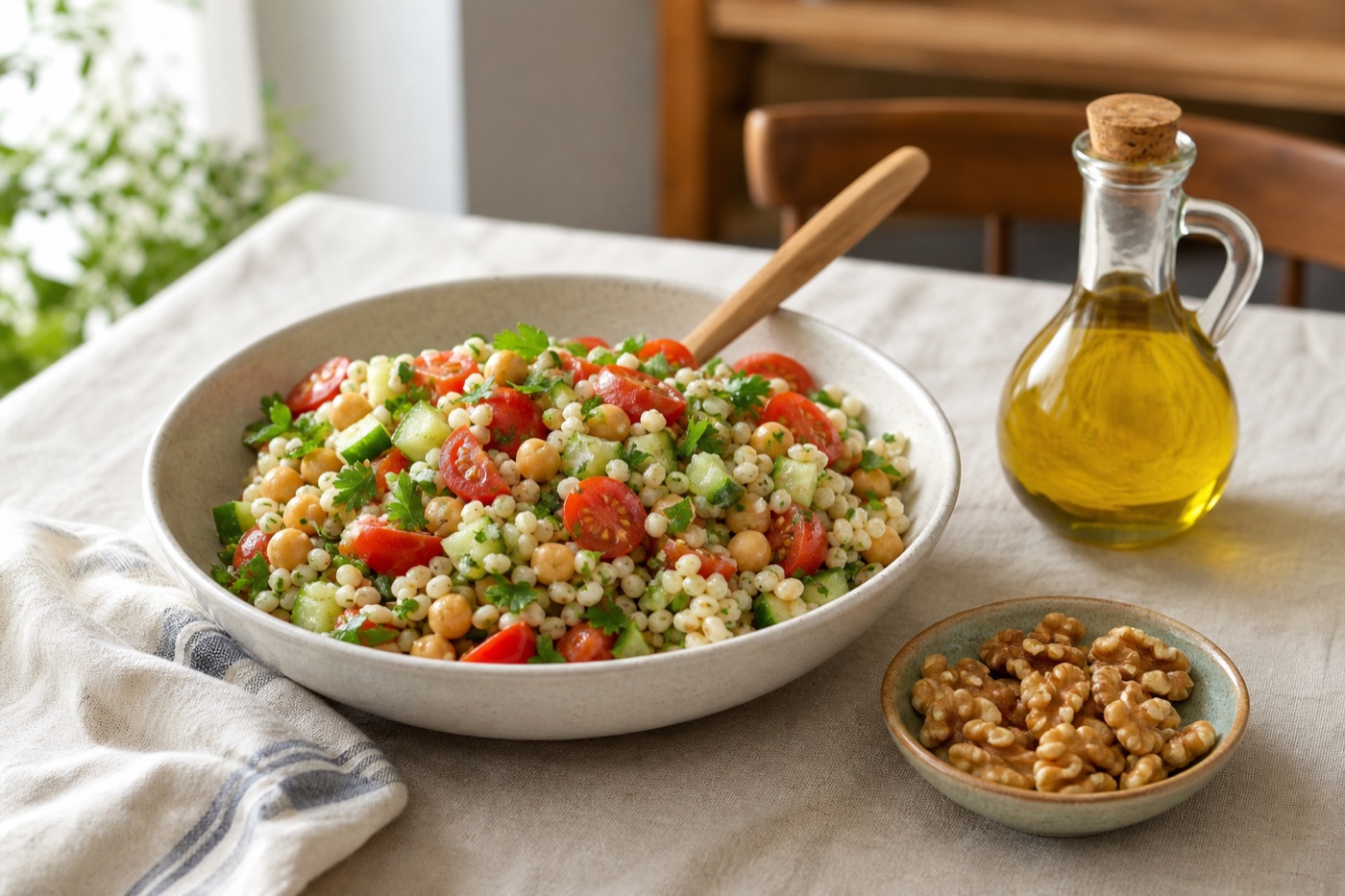
The foods that best support gut health are fiber-rich plant foods, such as beans, lentils, whole grains, vegetables, fruits, nuts and seeds, along with fermented foods like yogurt, kefir, sauerkraut and kimchi. Fiber feeds the trillions of microbes living in your large intestine, and variety matters: the more different plant foods you eat over a week, the more types of fiber those microbes get.
What “gut health” means
Your digestive tract is home to a huge community of bacteria and other microbes, often called the gut microbiome. These microbes help break down parts of food your body can’t digest on its own, especially certain fibers. When they ferment fiber, they produce compounds, including short-chain fatty acids, that nourish the cells lining the colon and play a role in many other processes in the body.
Research on the microbiome is still young, and claims often run ahead of the science. What is well established is that a diet rich in fiber and plant foods supports regular digestion and is linked with lower risk of several chronic diseases.
Fiber: food for your gut microbes
Fiber comes in two broad types, and most plant foods contain both. Soluble fiber, found in oats, barley, beans and many fruits, dissolves in water and forms a gel. Insoluble fiber, in whole grains, nuts and the skins of fruits and vegetables, adds bulk and helps things move along.
The Adequate Intake for fiber is about 14 grams for every 1,000 calories, which is roughly:
- Women up to 50: 25 grams a day; over 50: about 21 grams
- Men up to 50: 38 grams a day; over 50: about 30 grams
Most Americans fall well short. Here are some easy ways to close the gap, with approximate values from USDA FoodData Central:
| Food | Serving | Fiber (about) |
|---|---|---|
| Chia seeds | 1 oz (about 2 tbsp) | 10 g |
| Raspberries | 1 cup | 8 g |
| Lentils, cooked | 1/2 cup | 8 g |
| Black beans, cooked | 1/2 cup | 7–8 g |
| Avocado | 1/2 medium | 6–7 g |
| Whole-wheat spaghetti, cooked | 1 cup | 6 g |
| Pear, with skin | 1 medium | 5–6 g |
| Broccoli, cooked | 1 cup | 5 g |
| Oatmeal, cooked | 1 cup | 4 g |
| Air-popped popcorn | 3 cups | 3–4 g |
Our guides to beans and lentils and whole grains explain how to work more of these into everyday meals, and our article on how many fruits and vegetables you need covers produce targets.
Prebiotic foods worth knowing
“Prebiotics” are particular fibers and plant compounds that gut microbes especially like to ferment. You don’t need special products to get them; many everyday foods are rich sources:
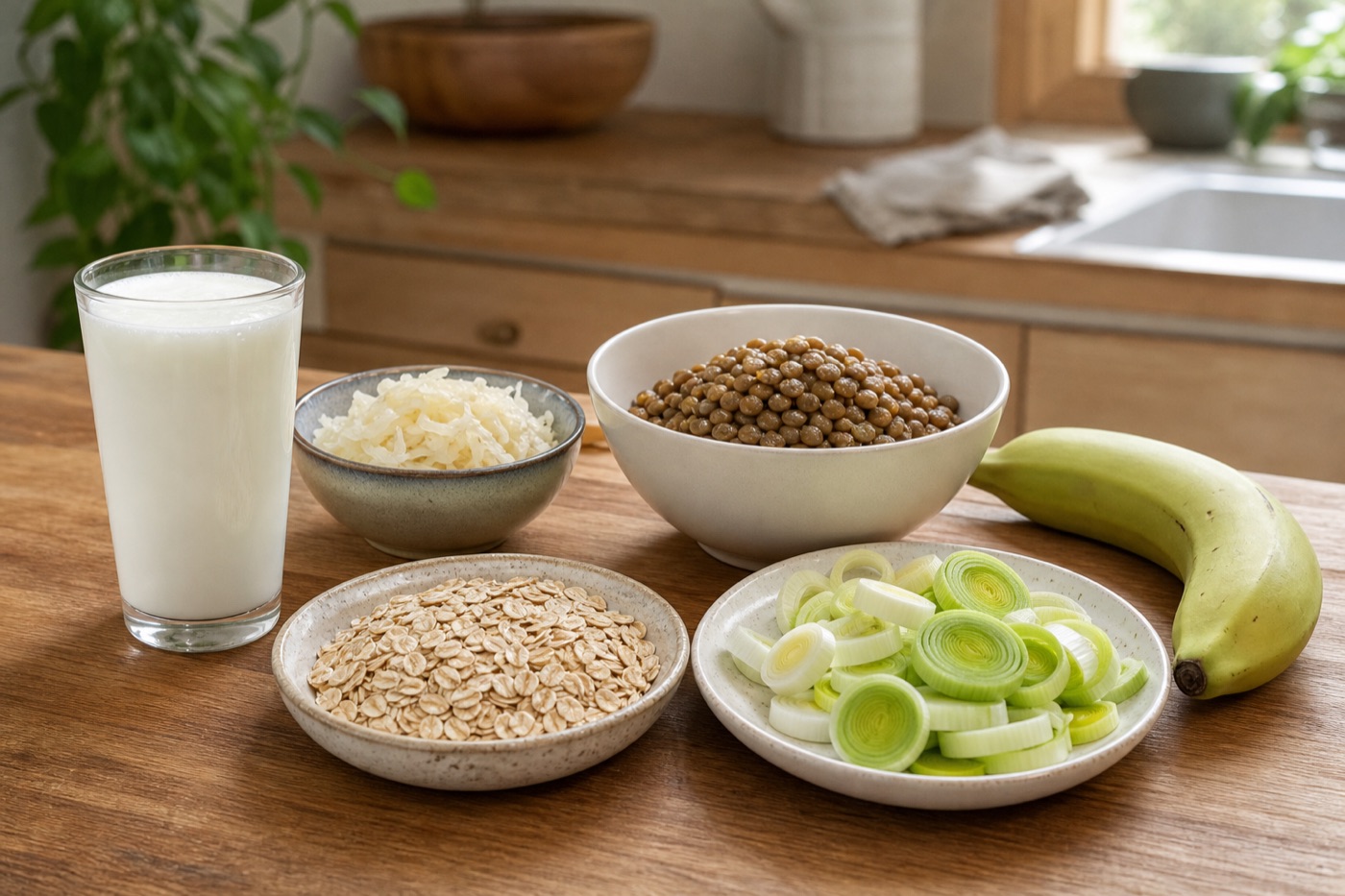
- Onions, garlic, leeks and scallions
- Asparagus and artichokes
- Slightly green bananas
- Oats and barley
- Beans, lentils and chickpeas
- Apples
Cooked and cooled potatoes, rice and pasta also develop some resistant starch, which behaves much like fiber in the gut.
Fermented foods
Fermentation uses microbes to transform food, and some fermented foods still contain live microbes when you eat them. Options include:
- Yogurt and kefir. Look for “live and active cultures” on the label, and choose plain versions to avoid added sugar.
- Sauerkraut and kimchi. Refrigerated, unpasteurized versions contain live cultures; shelf-stable jars have usually been heated, which kills them.
- Miso and tempeh. Fermented soy foods that add flavor and protein. Miso is salty, so a little goes a long way.
- Some aged cheeses. Certain varieties contain live bacteria.
Fermented foods can be a tasty addition, but they work alongside a high-fiber diet, not in place of it.
What about probiotic supplements?
Probiotic supplements contain specific strains of live microbes. According to the NIH Office of Dietary Supplements, any benefit depends on the particular strain and the health condition, and that research is still developing for many uses. Products also vary in what and how much they contain. For most healthy people, food is a fine place to start. If you’re considering a probiotic for a specific problem, or you have a weakened immune system or a serious illness, talk to your doctor first.
Adding fiber without discomfort
Jumping from a low-fiber diet to a high-fiber one overnight can cause gas, bloating and cramping. To avoid that:
- Go gradually. Add one higher-fiber food every few days over two to three weeks.
- Drink enough fluids. Fiber works best with water.
- Rinse canned beans, and start with small portions.
- Spread fiber across the day rather than loading it into one meal.
See your doctor if you have ongoing changes in bowel habits, blood in your stool, unexplained weight loss, persistent abdominal pain, or diarrhea or constipation that doesn’t improve. The NIDDK has detailed information on common digestive conditions, many of which have specific dietary approaches best worked out with a doctor or registered dietitian.
In short
Feed your gut with a wide variety of plant foods every week, aim for your daily fiber target, and enjoy fermented foods like plain yogurt, kefir and refrigerated sauerkraut if you like them. Increase fiber slowly with plenty of fluids, and save supplements for situations your doctor recommends.
Common questions
What are the best foods for gut health?
A wide variety of plant foods, especially beans, lentils, whole grains, vegetables, fruits, nuts and seeds, gives gut microbes the fiber they feed on. Fermented foods like yogurt and kefir with live cultures can add helpful microbes too.
How much fiber should I eat a day?
The Adequate Intake is about 14 grams per 1,000 calories, which works out to roughly 25 grams a day for women and 38 grams for men up to age 50, and about 21 and 30 grams after 50. Most Americans get far less.
Do I need a probiotic supplement?
Most healthy people don't need one. According to the NIH Office of Dietary Supplements, effects vary by strain and condition, and research is still developing. Ask your doctor first, especially if you have a weakened immune system.
Sources
Ruth covers nutrition through life stages and everyday health, from feeding school-age kids to eating well after sixty.