Eating Well When You Work From Home
Working from home puts the kitchen a few steps away. Set meal times, plan a quick lunch, keep snacks out of sight and water in reach to eat well all day long.
On this page
Eating well while working from home comes down to giving your day the structure an office used to provide: set rough times for meals and snacks, make lunch quick enough that you’ll actually stop for it, and arrange your kitchen so the easy choice is the good one. Small changes to what you see and when you eat matter more than willpower.
Why home days throw eating off
At an office, lunch has a time, a place and often company. At home, those cues disappear. The fridge is a few steps away, meetings run into each other, and the line between “a quick break” and “a handful of something” gets blurry.
A few patterns come up again and again:
- Grazing instead of meals. Small bites all morning add up but never feel like a meal, so you’re hungry again soon.
- Skipping lunch, then overdoing it later. A missed midday meal often turns into a big afternoon snack or a very large dinner.
- Stress eating. A tough call can send you to the pantry even when you aren’t hungry.
- No end to the workday. Without a commute, dinner time can drift late and snacking can stretch into the evening.
Give the day a shape
You don’t need a rigid schedule, but anchoring the day with meals helps. A sample rhythm might look like this:
- Breakfast within an hour or two of waking
- Mid-morning water or coffee while you plan your tasks
- Lunch at roughly the same time each day, away from your laptop
- An afternoon snack if dinner is more than four or five hours after lunch
- Dinner at a set time that marks the end of the workday
Put lunch on your calendar like a meeting. Treating it as a real appointment makes it less likely to be pushed aside.
Set up the kitchen like a helpful coworker
What you see is often what you eat. A few tweaks make the healthy option the default:
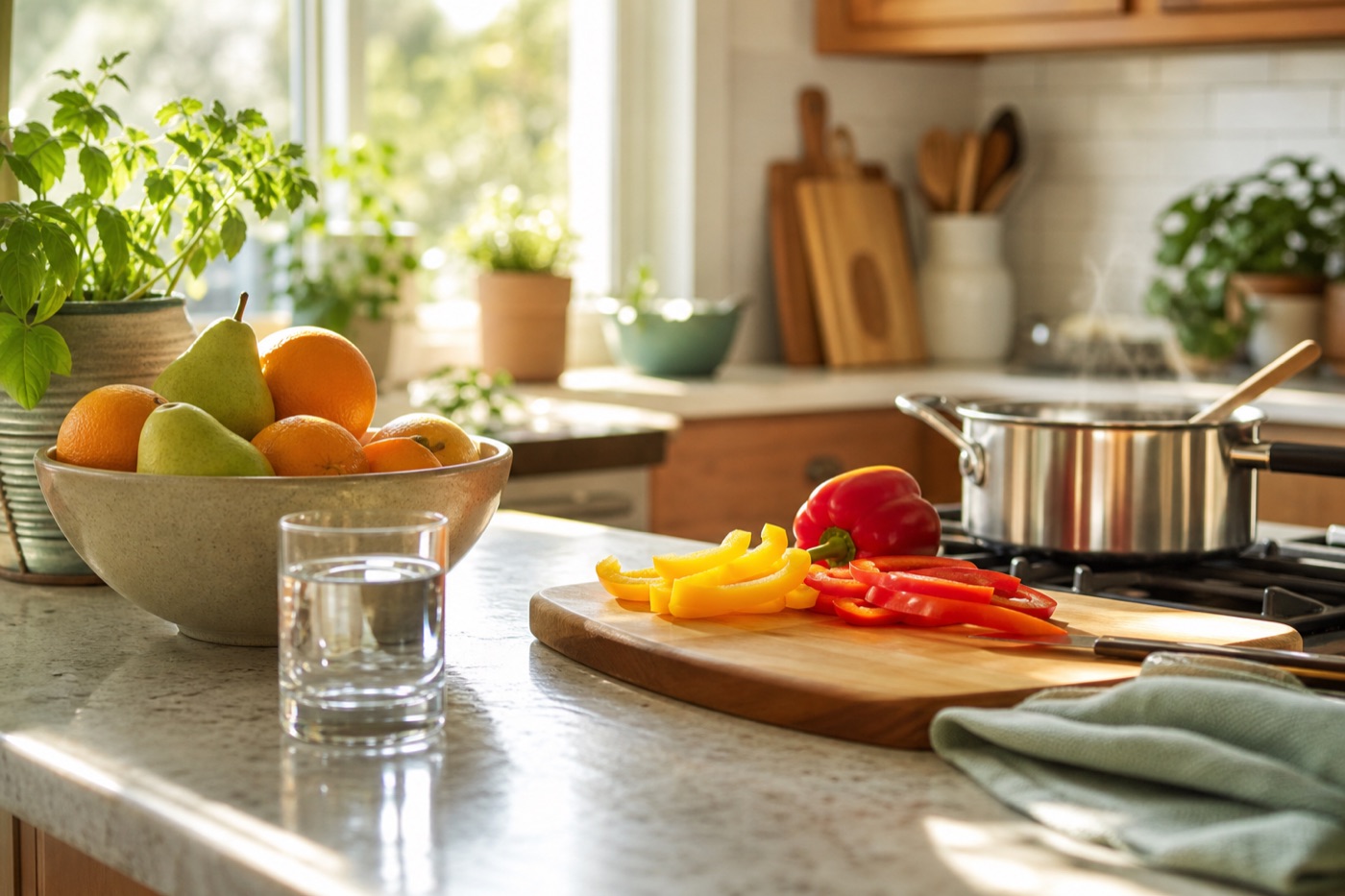
- Keep a bowl of fruit on the counter and cut vegetables at eye level in the fridge.
- Move sweets and chips to a high shelf or an opaque container.
- Keep a pitcher of water or a refillable bottle in the fridge so cold water is always ready.
- If you can, work somewhere other than the kitchen table so food isn’t in view all day.
Lunch in about 10 minutes
The faster lunch is, the more likely you’ll make one. Protein figures are approximate, based on USDA FoodData Central.
- Two eggs scrambled with spinach on a slice of whole-grain toast: about 15 g protein
- Bean and cheese quesadilla on a whole-wheat tortilla with salsa and a side of carrots: about 18 g
- Canned salmon salad mixed with plain yogurt, lemon and herbs, served over greens with crackers: about 20 g
- Cottage cheese bowl with tomatoes, cucumber, olive oil, black pepper and whole-grain crackers: about 13 g from 1/2 cup of cottage cheese
- Leftover rice or quinoa reheated with canned black beans, frozen corn and salsa: about 12 g
Cooking a bigger dinner and setting aside one portion for tomorrow’s lunch is the simplest shortcut of all. It also helps to shop for home workdays on purpose. A few staples make a fast lunch possible any day of the week: eggs, canned beans and fish, frozen vegetables, whole-grain tortillas or bread, a bag of washed greens, plain yogurt and a jar of salsa or pesto for flavor.
Drinks and the always-on coffee pot
When the coffee maker is steps away, cups can pile up without your noticing. The FDA notes that up to 400 milligrams of caffeine a day, roughly four or five cups of coffee, isn’t generally associated with dangerous effects in healthy adults, but many people sleep better with much less, especially after mid-afternoon. Our guide on how much caffeine is too much covers the details.
Keep water within reach. Sometimes what feels like a snack craving is really thirst or boredom, and a glass of water plus a short break is enough to tell the difference.
Snacks, breaks and movement
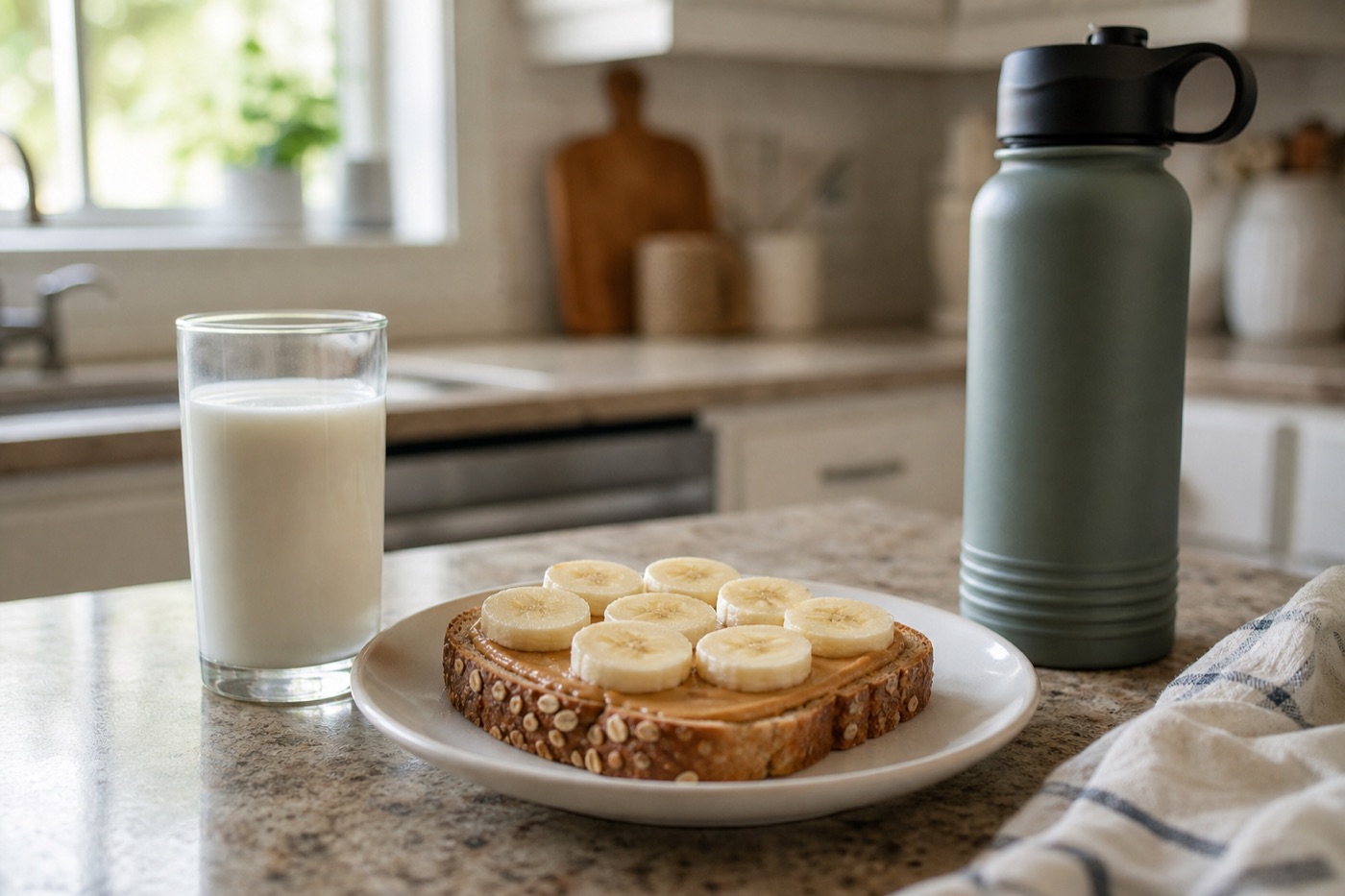
Snacking isn’t the problem; unplanned, distracted snacking is. Decide what your snack will be, put it on a plate instead of eating from the bag, and step away from your screen while you eat it. Good options pair protein or fat with fiber, such as an apple with peanut butter or yogurt with berries. Our guide to what makes a healthy snack has more ideas.
Movement helps too. Federal physical activity guidelines recommend that adults get at least 150 minutes of moderate activity a week. A 10-minute walk after lunch, stretching between calls, or standing for part of a meeting all chip away at that and give you a break that isn’t food.
If your evenings tend to turn into a long stretch of snacking, our article on late-night snacking looks at why it happens and what helps.
The short version
Recreate the structure that working from home takes away. Schedule lunch, make it simple, keep fruit and vegetables visible and treats out of sight, and use water, short walks and a set dinner time to mark the edges of the day. A few weeks of this rhythm usually makes it feel natural.
Common questions
Why do I snack more when I work from home?
The kitchen is close, the day has fewer natural breaks, and stress or boredom can feel like hunger. Setting meal and snack times and keeping tempting foods out of sight reduces the number of unplanned trips.
What is a quick, healthy lunch to make at home?
Eggs scrambled with spinach on whole-grain toast, a bean and cheese quesadilla, or leftover grains topped with canned beans and salsa all take about 10 minutes. Each pairs protein with fiber so it holds you until mid-afternoon.
How much coffee is too much during the workday?
For healthy adults, the FDA puts the level not generally tied to harmful effects at 400 milligrams daily, which is four or five ordinary cups. Sensitive people may feel jittery on much less, and pregnancy calls for a lower limit.
Sources
Ruth covers nutrition through life stages and everyday health, from feeding school-age kids to eating well after sixty.