Nutrition After 60: What Changes and What to Eat
After 60 you may need fewer calories but just as many nutrients, with more focus on protein, calcium, vitamin D, B12, fiber and fluids. Here's what to eat.
On this page
After 60, most people need somewhat fewer calories but just as many nutrients, and in a few cases more. That means making each meal count: protein at every meal to protect muscle, enough calcium and vitamin D for bones, vitamin B12 from fortified foods, plenty of fiber, and regular fluids even when you’re not thirsty. Changes in appetite, taste and medications also shape what and how you eat.
What changes after 60
Aging affects nutrition in several overlapping ways:
- Lower calorie needs. Muscle mass tends to decline and many people are less active, so the body burns less energy.
- Steady or higher nutrient needs. Calcium and vitamin D needs rise for many older adults, and B12 becomes harder to absorb.
- Weaker thirst. The National Institute on Aging notes that some older adults lose some of their sense of thirst, which makes dehydration easier to miss.
- Taste and smell changes. Food can taste blander, which can lead to less interest in eating or to adding more salt and sugar.
- Dental and digestive issues. Sore gums, loose dentures or constipation can limit food choices.
- Medications. Some drugs affect appetite, absorption or how the body handles specific nutrients.
Nutrients that deserve extra attention
Daily targets below are the Recommended Dietary Allowances and Adequate Intakes published by the NIH Office of Dietary Supplements for adults 51 and older.
| Nutrient | Daily target | Why it matters | Good food sources |
|---|---|---|---|
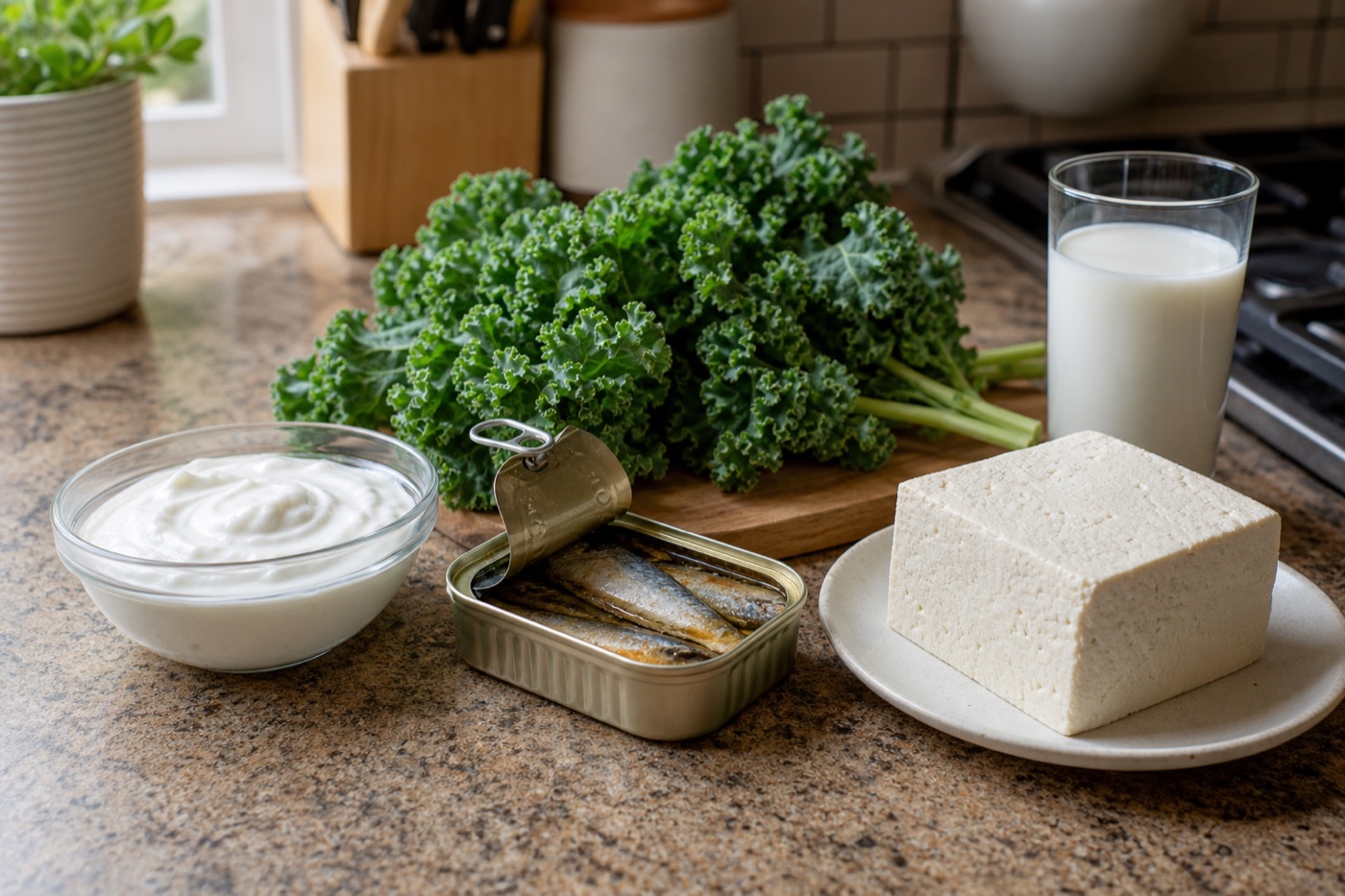
| Calcium | Women 51+: 1,200 mg; men 51–70: 1,000 mg; men 71+: 1,200 mg | Bone strength | Milk, yogurt, cheese, fortified plant milks, canned salmon with bones, calcium-set tofu |
| Vitamin D | 600 IU (15 mcg) through age 70; 800 IU (20 mcg) at 71+ | Calcium absorption, bone and muscle health | Fatty fish, fortified milk and plant milks, fortified cereals, egg yolks |
| Vitamin B12 | 2.4 mcg | Nerves and red blood cells | Fortified cereals and nutritional yeast, fish, meat, eggs, dairy |
| Fiber | Women 51+: about 21 g; men 51+: about 30 g | Regularity, heart health, steady blood sugar | Beans, whole grains, fruits, vegetables, nuts |
| Potassium | Women: 2,600 mg; men: 3,400 mg | Blood pressure, muscle function | Potatoes, beans, bananas, yogurt, leafy greens |
Because many older adults absorb less B12 from food, the Office of Dietary Supplements advises getting most of it from fortified foods or supplements after age 50. For more on two of the bone nutrients, see our guides to getting enough calcium and eating for strong bones.
Protein at every meal
Protein helps maintain muscle, which supports strength, balance and independence. Rather than eating most of it at dinner, spread it across the day:
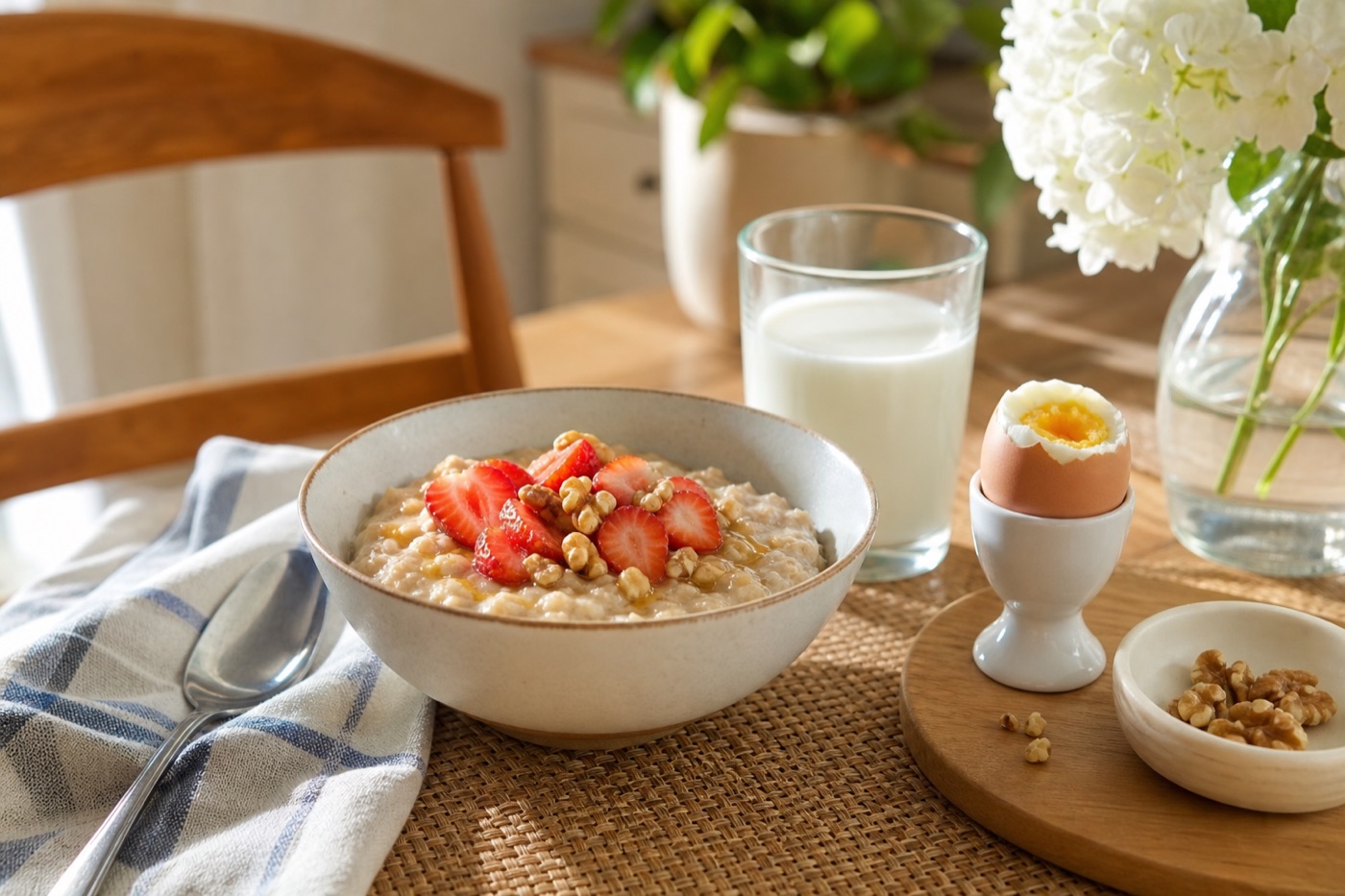
- Breakfast: eggs, Greek yogurt, cottage cheese, or oatmeal made with milk and topped with nuts
- Lunch: tuna or salmon salad, a bean soup, chicken on whole-grain bread
- Dinner: fish, poultry, lean meat, tofu or lentils with vegetables
- Snacks: cheese, a glass of milk, a handful of nuts, hummus
Soft, easy-to-chew proteins such as eggs, fish, beans, yogurt and ground meat can help if chewing is difficult. Pairing protein with regular activity, including some strength exercises, makes it more effective. Our guide to plant protein foods lists meatless options. If you have kidney disease, ask your doctor how much protein is right for you.
Appetite, thirst and taste
Drink before you feel thirsty
Water, milk, soup, tea and juicy fruits all count toward fluids. Keep a glass or bottle in sight, and drink with each meal and between meals. Ask your doctor about fluid goals if you take diuretics or have a heart or kidney condition.
When appetite is low
- Eat smaller meals more often, every three to four hours.
- Choose foods that pack nutrition into small portions, such as eggs, nut butters, yogurt, beans and avocado.
- Add flavor with herbs, spices, citrus, garlic and vinegar instead of extra salt.
- Share meals with others when you can; eating with company often helps appetite.
- See a dentist if chewing is painful.
Unplanned weight loss or a lasting lack of appetite is worth raising with your doctor.
Extra care with food safety
As people age, the immune system becomes less effective at fighting off foodborne illness. The USDA Food Safety and Inspection Service counts adults 65 and older among the groups at higher risk. Sensible precautions include:
- Cooking eggs until yolks and whites are firm
- Avoiding raw milk and soft cheeses made from unpasteurized milk
- Reheating hot dogs and deli meats until steaming hot
- Cooking meat, poultry and fish to safe internal temperatures
- Refrigerating leftovers within 2 hours and eating them within 3 to 4 days
Talk with your doctor about medications and supplements
Food and medicines can interact. Grapefruit and grapefruit juice affect how some drugs are processed, and the FDA advises checking with a pharmacist or doctor if you take them. People on the blood thinner warfarin are advised to keep their vitamin K intake, mainly from leafy greens, consistent from day to day rather than avoiding it. Before starting any supplement, ask your doctor or pharmacist whether it fits with your medicines. A registered dietitian can help if you have several conditions to balance.
Key takeaways
Choose nutrient-rich foods because calorie needs often fall while nutrient needs don’t. Include protein at each meal, meet your calcium and vitamin D targets, rely on fortified foods for B12, eat plenty of fiber, and drink regularly without waiting for thirst. Keep food safety in mind, and bring any appetite, weight or medication questions to your doctor.
Common questions
Do older adults need fewer calories?
Often, yes. Muscle mass and activity tend to decline with age, which lowers calorie needs, while needs for many vitamins and minerals stay the same or go up. That makes nutrient-rich foods especially important.
Why is vitamin B12 a concern after 50?
Many older adults absorb less vitamin B12 from food because of changes in stomach acid. The NIH Office of Dietary Supplements advises that people over 50 get most of their B12 from fortified foods or supplements.
How can I tell if I'm drinking enough water?
The sense of thirst can weaken with age, so don't wait to feel thirsty. Drink fluids with every meal and between meals, and ask your doctor how much is right for you, especially if you take diuretics or have heart or kidney conditions.
Sources
Ruth covers nutrition through life stages and everyday health, from feeding school-age kids to eating well after sixty.