How to Eat Well While Traveling
Eating well on the road is easier with packed snacks, smart picks at airports and rest stops, a hotel breakfast plan, water on hand and food safety in mind.
On this page
Eating well while traveling is mostly about planning one step ahead: pack a few filling snacks, look for meals that pair protein with vegetables or fruit, keep water with you, and handle food safely when you’re far from a fridge. You don’t have to be perfect on a trip, just prepared enough that hunger doesn’t make the choice for you.
Pack a snack kit before you leave
Travel days are long and unpredictable. Delays, traffic and closed kitchens are much easier to handle with food in your bag. Good travel snacks are sturdy, don’t need refrigeration and combine some protein, fat or fiber. Approximate values from USDA FoodData Central:
- Almonds or mixed nuts, 1 oz: about 160–170 calories, 6 g protein
- Medium apple: about 95 calories, 4 g fiber
- Medium banana: about 105 calories
- Peanut butter, 2 tbsp in a single-serve cup: about 190 calories, 7–8 g protein
- Raisins, 1/4 cup: about 110–120 calories
- String cheese, 1 stick: about 80 calories, 6–7 g protein (keep it cool)
- Whole-grain crackers: check the label, since serving sizes vary widely
Trail mix, roasted chickpeas and homemade sandwiches on whole-grain bread are also easy to pack. Our guide to nuts and seeds explains portion sizes, which matter because nuts are calorie-dense.
At the airport
Security rules shape what you can bring. Solid foods are allowed in carry-on bags, but spreads, dips and creamy foods such as yogurt, hummus and peanut butter are treated like liquids, so they must be 3.4 ounces or less. Bring an empty water bottle and fill it after screening.
When you buy food in the terminal, scan for:
- Salads or grain bowls with a protein such as chicken, eggs or beans
- Sandwiches or wraps on whole-grain bread with vegetables
- Yogurt with fruit, hard-boiled eggs, fruit cups and plain nuts
- Water, unsweetened tea or plain coffee rather than large sweetened drinks
Many airport and highway restaurants post calorie counts on their menus, which makes comparing options quicker. For more on ordering at quick-service counters, see our guide to healthier choices at fast-food restaurants.
On a road trip
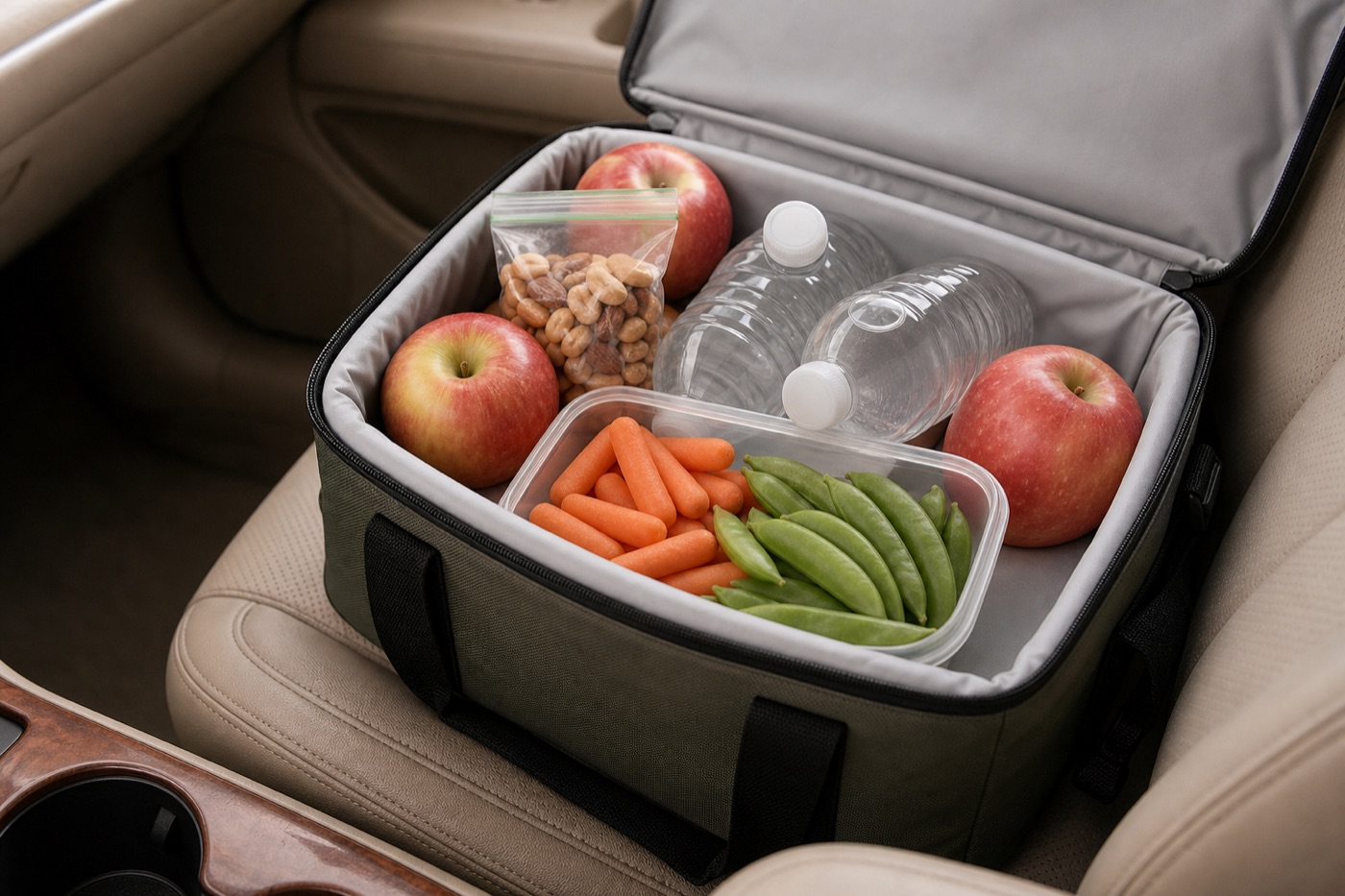
A cooler turns a road trip into a moving pantry. The USDA Food Safety and Inspection Service advises keeping cold foods at 40°F or below, so:
- Chill the cooler and the food before packing.
- Fill gaps with ice or frozen gel packs; frozen water bottles do double duty as drinks later.
- Keep the cooler inside the car, not in a hot trunk.
- Discard perishables that have sat out more than 2 hours, or 1 hour if it’s over 90°F.
Plan stops at grocery stores as well as gas stations. A supermarket deli or salad bar often has rotisserie chicken, cut fruit, salads and yogurt, which make a quick picnic at a rest area.
In a hotel room
A mini-fridge and a microwave go a long way. On the first evening, pick up breakfast basics: yogurt, fruit, instant oatmeal and milk or a plant milk. Starting the day with your own breakfast saves money and gives you a predictable, balanced meal before a day of eating out.
If breakfast is included, build a plate instead of grazing: eggs or yogurt for protein, fruit, and a whole-grain option such as oatmeal or whole-wheat toast. At dinner, splitting an entree or ordering an appetizer plus a side salad keeps restaurant portions in check.
When nearly every meal comes from a restaurant, balance matters more than any single order. Scan menus for dishes built around vegetables and grilled, baked or roasted proteins, ask for dressings and sauces on the side, and remember that dessert doesn’t have to come with every dinner. If one meal of the day is a big celebratory dinner, keep lunch simple, such as a hearty salad or a broth-based soup with bread. On work trips with catered meetings, fill up at the fruit and vegetable trays first and treat the pastry basket as optional.
When you travel abroad
Trying local food is part of the point. To enjoy it safely, the CDC’s general advice for travelers in places with less reliable water and sanitation includes eating food that is cooked and served hot, drinking sealed bottled water, avoiding ice unless it’s made from safe water, and eating raw fruit only if you wash it in safe water or peel it yourself. Check the CDC’s travel health pages for your destination before you go.
Water, sleep and time zones
Cabin air on planes is dry, and long drives make it easy to forget to drink. Sip water steadily through travel days. Caffeine and alcohol can both make jet lag and poor sleep worse, so go easy on them, especially in the evening.
Crossing time zones? Switch to local meal times as soon as you arrive. Eating breakfast, lunch and dinner on the new schedule helps your body settle in. If you need something on a long flight, our guide to what makes a healthy snack has easy combinations.
The takeaway
Pack a few sturdy snacks and an empty water bottle, look for meals that pair protein with produce, keep cold food cold, and follow local water advice abroad. Then relax and enjoy the meals that make the trip memorable; a few days of travel food is part of the experience, not a setback.
Common questions
What healthy snacks can I bring through airport security?
Solid foods such as fruit, nuts, crackers, sandwiches and granola-style bars can go in carry-on bags. Creamy foods like yogurt, hummus and peanut butter count as liquids or gels, so containers over 3.4 ounces need to go in checked luggage.
How do I keep food cold on a road trip?
Pack perishables in a cooler with plenty of ice or frozen gel packs, keep it in the air-conditioned car rather than the trunk, and open it as little as possible. Aim to keep food at 40°F or below.
Is it safe to drink tap water when traveling abroad?
It depends on the destination. The CDC offers country-by-country travel health advice; where tap water isn't safe, stick to sealed bottled water and skip ice made from tap water.
Sources
Naomi edits Nutrition for Everybody and writes the app rankings. She cares most about advice that still works on a Tuesday night with a tired family and a half-empty fridge.